









Canva Google Cloud Meta: The AI infrastructure shift is moving past the model
This week, the AI infrastructure shift got concrete. Canva, Google Cloud, and Meta each made moves that matter. This story follows Canva Google Cloud Meta.
Each story looks separate. Together, they show where AI is heading. The value now sits in the system around the model.
Canva Craft plans before it paints
Canva launched its first in-house image model, called Canva Craft. As reported by The Verge, it competes with models from OpenAI, Microsoft, and Google.
The key detail is the architecture. Craft uses two stages. First, it plans the design. Then it generates the image.
Canva says this gives more precision, consistency, and control. That claim needs independent tests. Still, the design makes sense.
Why planning matters for designers
Design work is not a single picture. It involves layout, text, brand colors, and spacing. A planner stage can lock those choices first.
Single-pass models often drift. They may mangle text or ignore a layout. A plan gives the generator a fixed target.
In practice, this means fewer retries. Teams that make hundreds of assets care about that. Consistency beats novelty in production.
Google Cloud gives each agent its own microVM
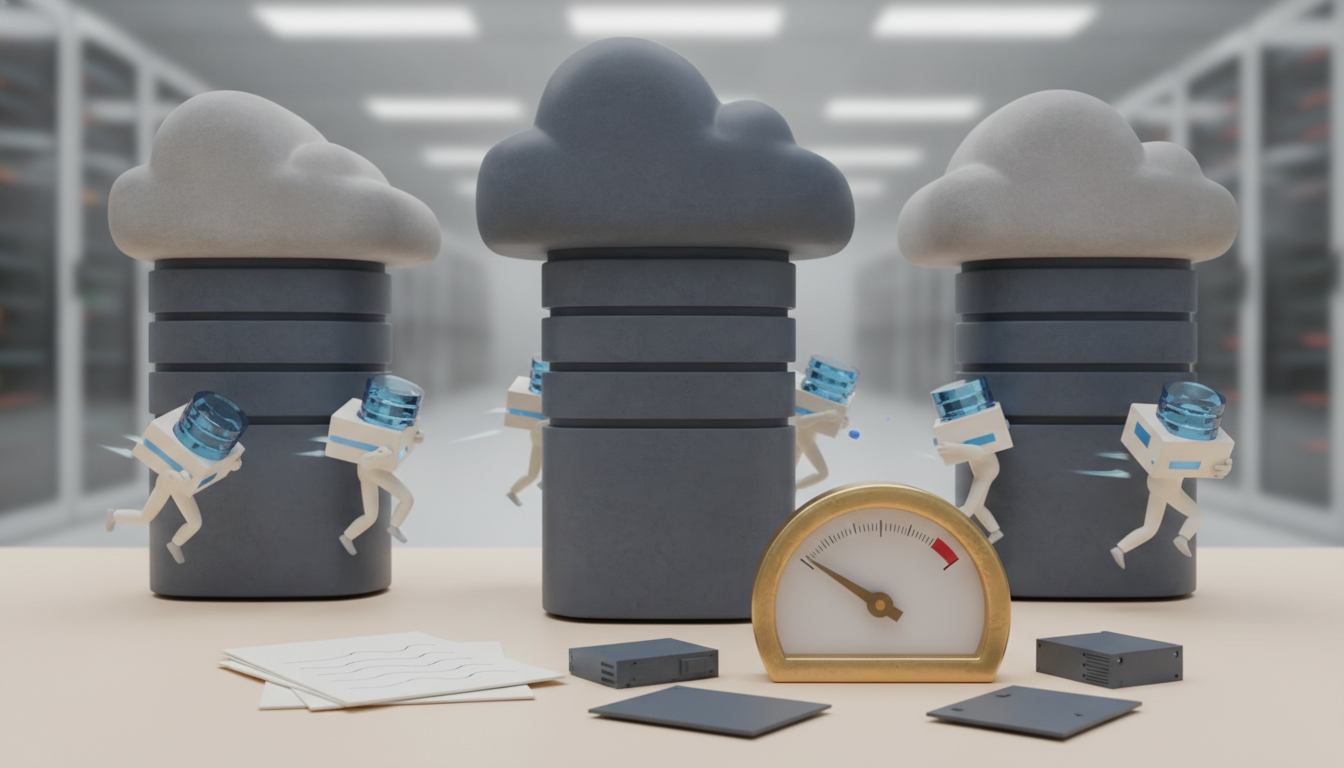
Google Cloud announced Agent Compute Engine. MarkTechPost reports that every AI agent gets its own hardware-isolated microVM. No credentials live inside it.
A microVM is a tiny virtual machine. It boots fast and walls off the workload. If an agent misbehaves, the damage stays inside the box.
The no-credentials design is the smart part. An agent can be tricked by a malicious prompt. If it holds no secrets, there is little to steal.
Google says the service already runs Gemini agents. It enters preview in the coming months. Watch for pricing and cold-start numbers.
The harness matters more than the model
MIT Technology Review makes a related point in its piece on AI serving harnesses. The next edge in enterprise AI depends less on model choice. It depends more on what you build around the model.
I agree. Models change every few months. Isolation, routing, logging, and access control last longer.
Canva and Google show two versions of this idea. Canva wraps a planner around a generator. Google wraps a sandbox around an agent.
| Company | Product | Harness idea |
|---|---|---|
| Canva | Canva Craft | Plan, then generate |
| Google Cloud | Agent Compute Engine | One microVM per agent |
Meta’s terms leave data questions open
Data rights remain the weak spot. Meta changed its business terms. It removed language suggesting it could freely train AI on news sites.
Legal experts told The Verge the edits fall short. They point to wording about content “associated with your products or services.” They say that phrase could still allow scraping.
For publishers, vague terms are not protection. For enterprises, the lesson is similar. Read what a vendor can do with your data.
Canva Google Cloud Meta: The human counterpoint
Not everyone wants AI in the pipeline. Laika’s Travis Knight called AI antithetical to his studio, as covered by The Verge. Wildwood took five years and more than 230 puppets.
That stance is a reminder. Craft still has a market. Tools like Canva Craft will serve volume work, not every creative path.
Canva Google Cloud Meta: What this means for your team
Teams building with AI should act on a few points. Here are my takeaways:
- Plan your harness before you pick a model.
- Isolate agents and keep secrets out of them.
- Test planner-based image tools on real brand work.
- Audit vendor terms for training rights.
Running agents locally also pushes hardware needs up. A solid developer laptop (paid link) helps for development and testing.
Canva Google Cloud Meta: Bottom line
The AI infrastructure shift is clear. Model quality still counts, but control wins in production. The real test will be whether these harnesses hold up under load, and whether data terms catch up.
As an Amazon Associate, TechMogo earns from qualifying purchases.