









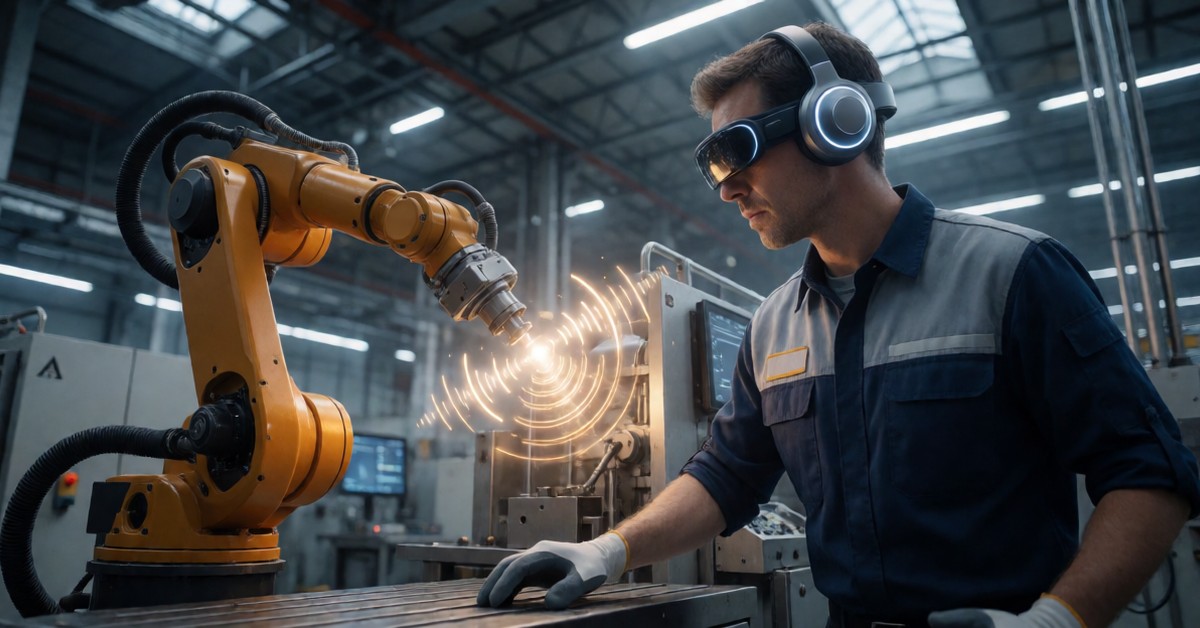
Georgia Tech researchers recently unveiled a headset system that transforms nearby robot motion into specific, spatial lo-fi music. This new technology solves a common industrial safety problem when workers focus intensely on detailed tasks and miss subtle physical dangers. The research team claims this unique audio cue system successfully alerts people to approaching machinery, potentially preventing serious workplace accidents. The system offers a novel way for workers to perceive risk, fundamentally changing how we approach factory safety. This innovative approach gives workers crucial warning signals without forcing them to stop their careful work. Researchers believe this method significantly improves overall workplace security and efficiency.
Understanding Spatial Audio
The headset system analyzes real-time movement data from industrial robots operating inside a busy facility. This data feeds a complex algorithm that converts robotic motion into a unique sound profile resembling a specific type of lo-fi music. The system utilizes spatial audio, meaning the sound changes precisely based on the robot’s exact location relative to the wearer. This feature allows workers to pinpoint danger without needing to look up from their delicate tasks. Scientists state that this method works because the human brain easily tracks changes in sound direction, making it an incredibly powerful warning tool.
This method mirrors how music builds tension in horror films, warning the listener about impending danger. The headset system adapts this concept for industrial settings, where a strange musical cue signals a heavy machine moving too close to a human worker. The Georgia Tech team suggests this method works very well in environments where visual monitoring proves difficult or highly distracting. Workers wearing the headset receive audio cues directly linking to the speed and trajectory of the robotic equipment. For example, slow movement might generate a deep bass note, while a rapid movement could trigger a quick, higher-pitched melody. This level of detail allows the worker to judge the severity of the approaching threat without shifting their gaze from the task. The system provides nuanced data interpretation, offering more than simple alerts.
Improving Safety Protocols
Conventional factory safety relies heavily on loud sirens and bright warning lights. These older methods sometimes become ignored by workers who listen to the constant noise of a busy production line. The headset system aims to replace these loud, repetitive alarms with a more subtle, context-aware audio warning. This nuanced musical approach suggests a shift away from simple noise generation toward advanced data interpretation. The system learns patterns of dangerous robot movements and assigns a unique, gentle sound to each specific pattern. This allows workers to build an intuitive relationship between a sound and a mechanical threat.
The headset system translates real-time robot motion into spatial audio cues.
The audio cues change based on the robot’s speed and direction.
This system alerts workers before they visually observe the danger.
Future research may focus on combining haptic feedback with the auditory cues, allowing the headset to vibrate when a robot approaches. Combining sound with touch could provide a layered warning system, giving the worker multiple ways to receive critical information. Engineers must refine the sound profile to ensure it remains distinct even in loud factory settings. The advancement of this headset system demonstrates how creative audio application can address many complex safety issues across industries. Workers benefit greatly from this advanced sensory input.
- Improved Focus: Workers maintain concentration on their primary job while receiving critical alerts. Reduced Distraction: Subtle musical cues do not overwhelm the worker’s auditory processing ability. Predictive Warning: The system provides advance notice of movement, allowing workers time to react appropriately.
How Does the Technology Work?
This groundbreaking technology captures movement data from machines operating in close proximity to humans. The advanced algorithm then translates that movement into a unique and recognizable sonic pattern. Spatial audio ensures that the sound appears to come from the exact location of the threatening robot. Workers can therefore locate the source of the danger instantly without needing to look away. This system effectively bridges the gap between machine movement and human perception. It creates a highly effective, non-intrusive safety layer for the modern workplace. The researchers emphasize the importance of integrating sound with existing safety practices. They believe this headset represents a significant leap forward in industrial hazard mitigation.
Further refinement involves testing the system’s robustness in diverse factory settings. Researchers are currently optimizing the sound profiles to prevent confusion between different types of machine movements. Ensuring clarity is paramount for the system’s success. The development process involves continuous feedback from industrial safety experts. These experts confirm that the subtle nature of the alerts is exactly what is needed in high-precision work areas. This approach promises a safer future for industrial labor. The headset system offers a paradigm shift in worker protection.