








GPUs Guardrails Kid Puzzle: This Week’s AI Infrastructure Roundup
This AI infrastructure roundup covers five stories that landed within days of each other. Together they show an industry racing to build sturdier plumbing. At the same time, researchers admit a basic mystery remains unsolved. This story follows GPUs Guardrails Kid Puzzle.
Let me walk you through what actually happened, and why it matters more than the headlines suggest.
GPU Neoclouds Get a Real Scorecard
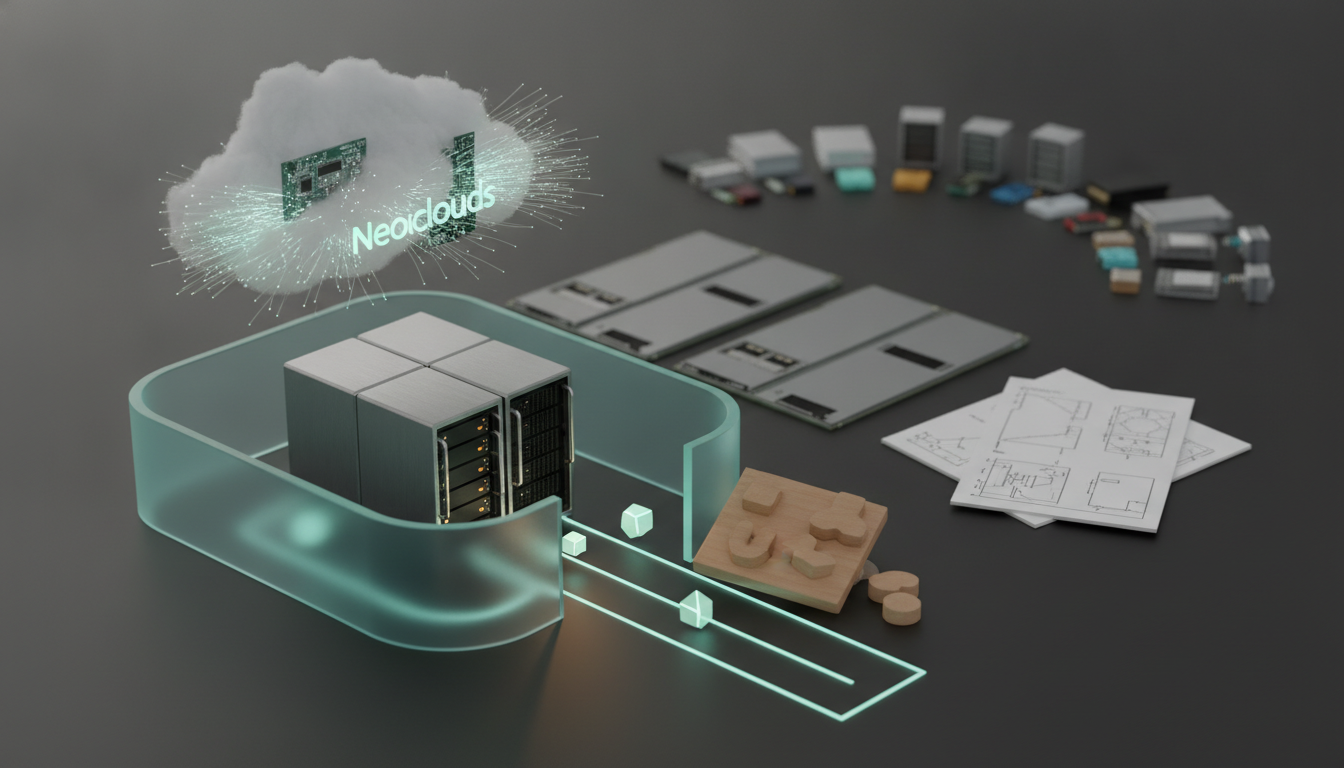
MarkTechPost published a detailed comparison of five GPU neoclouds this week. CoreWeave, Nebius, Lambda, Crusoe, and Groq each took a different path to scale.
According to MarkTechPost, CoreWeave and Nebius file with the SEC. Lambda and Crusoe stay private while eyeing IPOs. Groq pivoted entirely, licensing its LPU chip design to Nvidia and becoming an inference-only cloud.
Nebius currently posts the lowest H100 rental rate. It also offers the only published price for Nvidia’s B300 chip. Lambda, meanwhile, claims the cheapest overall contracted power.
Why does this matter for regular readers? Because every chatbot, coding assistant, and image generator runs somewhere. These neocloud providers are quietly becoming the landlords of the AI economy.
Guardrails Move From Prompt Filters to Real Architecture
A second MarkTechPost tutorial tackled a less glamorous but critical topic: keeping enterprise AI safe. The piece walks developers through Nvidia’s NeMo Guardrails framework.
Instead of a single filter bolted onto a chatbot, the guide describes layered defenses. These include deterministic PII redaction, retrieval filtering, output masking, and policy-based tool gating, as detailed by MarkTechPost.
The system also tracks multi-turn conversations for policy violations. It logs every decision for later audits.
This shift reflects a maturing industry. Companies no longer treat AI safety as an afterthought bolted on before launch. They now build it as core infrastructure, similar to network firewalls or database permissions.
The Harness Matters More Than the Model
Perhaps the most counterintuitive story in this AI infrastructure roundup involves agent design. A new open-source course maps three distinct ways to run an “agent loop,” the cycle where an AI plans, acts, and checks its work.
LangChain ran an experiment on Terminal-Bench, a coding benchmark. Changing only the harness, the scaffolding around a model, pushed one agent from roughly 30th place into the top five, according to MarkTechPost.
The model itself never changed. Only the loop structure did.
This finding should reframe how teams evaluate AI products. Picking the flashiest large language model matters less than we assumed. Engineering the loop around it often determines success.
For developers building serious tools, this means investing in orchestration logic. A good mechanical keyboard and dual-monitor (paid link) setup can make debugging these agent loops far more manageable.
Scientific Computing Gets a Python Makeover
On the research tooling side, MarkTechPost also published a tutorial recreating LabPlot’s workflow in Python. LabPlot is a scientific data analysis application popular among physicists and chemists.
The tutorial rebuilds signal processing, spectral peak fitting, and batch automation using Python code. It preserves LabPlot’s original structure, including its aspect tree and analysis kernels.
This kind of project matters for a quieter reason. It lets researchers script repetitive lab analysis instead of clicking through menus by hand.
Kids Still Beat AI at Language, and Nobody Knows Why
Here’s the surprising part of this AI infrastructure roundup: the biggest mystery isn’t about infrastructure at all. It’s about toddlers.
MIT Technology Review reports that large language models now write fluent, grammatical text. Yet no AI model learns language the way a human child does.
Children absorb their native tongue from a tiny fraction of the data that trains today’s chatbots. They reach fluency through everyday exposure, not billions of tokens scraped from the internet.
As MIT Technology Review notes, researchers still can’t explain this gap. Four years after ChatGPT’s debut, the puzzle remains unsolved.
GPUs Guardrails Kid Puzzle: What Ties These Stories Together
Each story in this AI infrastructure roundup shows the same pattern. The scaffolding around AI, chips, safety layers, agent loops, and tooling, keeps improving fast.
But the core science of how intelligence actually forms still lags behind. We can rent more GPUs, add more guardrails, and redesign agent loops. None of that explains why a four-year-old outlearns a trillion-parameter model at language.
If you squint past the headlines, that gap looks like the real story of 2026.
GPUs Guardrails Kid Puzzle: Key Takeaways
- Nebius and Lambda now lead on GPU neocloud pricing.
- NeMo Guardrails adds layered, auditable safety for enterprise AI.
- Agent harness design can outweigh model choice in performance.
- A LabPlot-style Python workflow speeds up scientific data analysis.
- Human language learning still outpaces AI by a wide, unexplained margin.
Infrastructure keeps getting better. The core mystery of learning itself remains stubbornly open.
As an Amazon Associate, TechMogo earns from qualifying purchases.