








Artificial intelligence moves beyond simple consumer tools to become a vital part of key global industries. These ai industrial applications manage physical foundations where safety and constant function remain critical for modern companies. These systems handle vast networks and process huge amounts of data that standard software cannot manage effectively. Companies combine AI into complex systems to achieve a level of control and maintenance previously impossible for human workers.
Key Details
Industrial systems like power grids and manufacturing plants depend on extensive networks of sensors and control mechanisms. AI algorithms train themselves to track these large networks, predicting equipment failures before they happen in the real world. This shift toward proactive management fundamentally changes how these systems function, moving from fixing issues to smart, forward-thinking oversight. Makers deploy AI to analyze sensor data, identifying subtle patterns that show equipment stress and wear. These ai industrial applications help ensure essential services remain accessible even when facing unexpected physical strain or challenging conditions.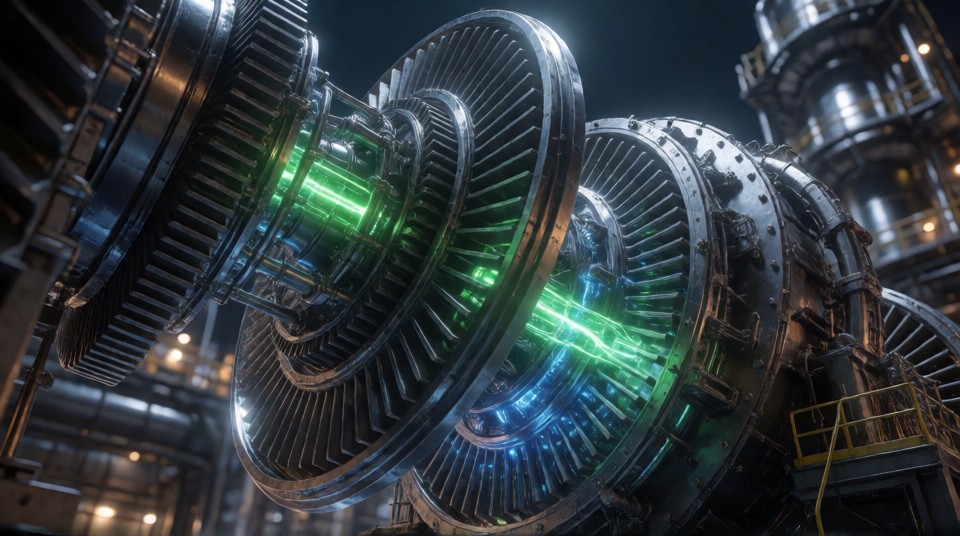
One major area of focus involves the energy sector, where AI assists in managing complex power flow networks. Analyzing real-time demand and supply fluctuations, AI systems optimize energy flow, preventing grid overloads and reducing overall waste. Utilities claim these smart systems help balance variable energy sources, such as solar and wind, which require precise adjustments. AI processes millions of data points every second, making it uniquely suited to maintain stability in these complex foundations.
How well does AI predict failures? Security experts warn that AI offers powerful predictive ability, but no system achieves total perfection. Industrial processes still present physical risks that tools alone cannot entirely fix. These systems flag anomalies, yet they cannot account for every possible physical failure or sudden external event. Current AI models identify deviations from expected functions very effectively, greatly improving upon older tracking methods. However, these complex algorithms require continuous human oversight to validate outputs and address new situations.
How Quickly Are Industrial Applications Being Adopted?
Adoption of these ai industrial applications moves quickly because physical downtime costs more than advanced monitoring software. Factories use AI to manage supply chains, which optimizes material movement and keeps production schedules on track efficiently. In logistics, AI analyzes traffic and weather data, adjusting routes to minimize delays and fuel use across the globe. This predictive logistics transforms how goods move globally, making the entire process more efficient and less prone to human error.
Predictive maintenance schedules reduce unplanned equipment shutdowns. AI monitors stress levels in rotating machinery like turbines. Systems learn from past failures to avoid repeating specific functional errors. Real-time data analysis allows workers to make instant, informed decisions.
AI systems also enhance safety within industrial settings, which is a major concern for workers in hazardous locations. These tools track worker behavior and environmental conditions, providing alerts when risks appear suddenly. For example, AI monitors gas levels and equipment integrity in chemical plants, preventing dangerous leaks or failures. Safety regulators watch these developments closely, seeing the promise of AI to reduce industrial accidents greatly.
Achieving Safer Industrial Applications
AI systems analyze visual and sensory data to detect potential hazards unseen by the human eye. These ai industrial applications track earth stability in construction and mining, preventing collapses that endanger workers. Engineers claim this self-running surveillance provides a protective layer human patrols cannot match over long periods. This capability becomes very important as industries push for higher levels of automated systems and faster function.
Integrating AI into older industrial systems presents unique challenges because those older machines were never designed to talk with modern software. Updating old foundations requires specialized expertise and significant investment, slowing widespread adoption. Companies develop new middleware and standardized protocols to bridge the gap between old hardware and modern AI software. These ongoing efforts are essential for a full transition into the future of manufacturing things.