










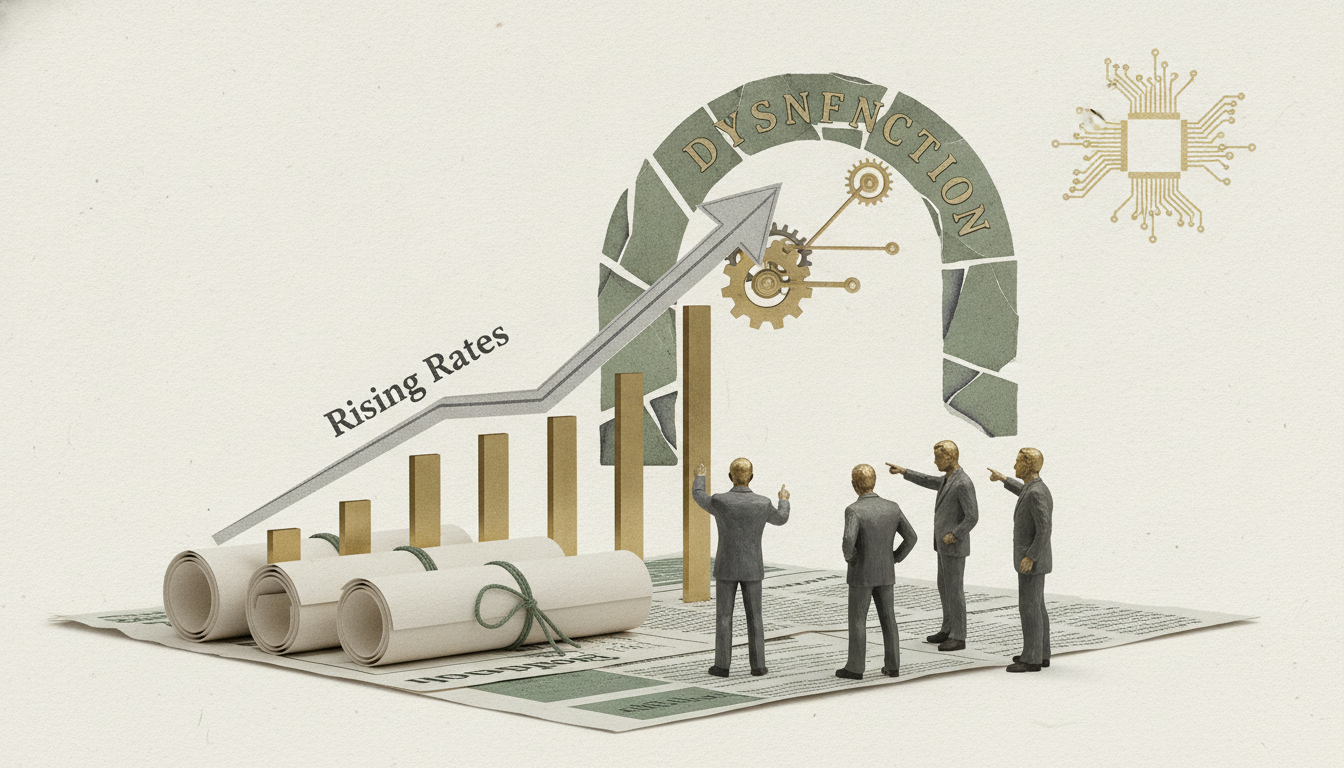
Let’s look at the numbers. Rising bond rates keep spooking headlines, but the math tells a calmer story. Higher yields often signal a healthier economy, not a broken one. This story follows Rising Bond Rates Aren.
Rising Bond Rates Aren: Context: Why Rising Bond Rates Make Headlines
For over a decade after the financial crisis, interest rates sat near zero. That wasn’t a sign of strength. It reflected weak demand for capital and sluggish growth.
Now rates are climbing again. Several economists interviewed by MarketWatch argue this shift actually reflects renewed strength. Businesses want to borrow because they expect growth. Consumers spend because they feel confident. That pushes rates upward, and it’s a healthier signal than the artificial near-zero era.
Rising bond rates also change how investors value stocks. Higher yields on safe bonds compete with equities for capital. That competition forces companies to prove real earnings power, not just growth stories.
Numbers: Winners and Losers in a Higher-Rate World
The Russell 1000 Value index gained 16.3% in the first half of 2026. That outpaced the S&P 500’s 10.2% return and beat the broader Russell 1000 index too, according to Yahoo Finance. AI infrastructure stocks drove much of that value rally.
TD SYNNEX offers a good example. Its Hyve Solutions division builds custom servers for hyperscale data centers. That segment has quietly become a major growth driver, according to MD Sass’s second-quarter investor letter. Meanwhile, not every stock enjoys this environment.
Ingersoll Rand shares fell to $78.59 over six months. That’s a 16.4% loss, compared with a 12.3% gain for the S&P 500. MarketAxess tells a similar story. Its stock trades near $162.70 after a 15.3% drop over the same period.
| Stock/Index | 6-Month Move |
|---|---|
| S&P 500 | +12.3% |
| Russell 1000 Value | +16.3% (H1 2026) |
| Ingersoll Rand (IR) | -16.4% |
| MarketAxess (MKTX) | -15.3% |
Both IR and MKTX face specific headwinds beyond just rising bond rates. Analysts covering both names point to competitive pressure and slowing margins. Rising rates simply make investors less patient with underperformers.
Implications: Rising Bond Rates Reshuffle the Market
Rising bond rates don’t punish the whole market equally. They punish companies without pricing power or clear earnings growth. That’s why value stocks tied to real infrastructure demand, like AI data centers, have held up well.
Growth stocks without near-term profits face tougher scrutiny. Investors can now earn solid returns from bonds alone. Consequently, they demand more proof before paying up for speculative growth.
This dynamic also explains why some analysts recommend rotating out of struggling names. Instead of holding IR or MKTX, some suggest shifting toward companies with stronger balance sheets and clearer growth paths. That’s a direct consequence of a higher-rate world rewarding discipline over hype.
September adds another wrinkle. Historically, stocks underperform in September more than any other month. LPL Financial’s Adam Turnquist noted this pattern on Yahoo Finance as August trading closed. Combine that seasonal weakness with rising bond rates, and volatility looks likely through the fall.
Still, seasonal patterns aren’t destiny. They’re tendencies, not guarantees. Investors who focus only on the calendar often miss the bigger story: capital costs are normalizing, and companies must adapt.
What Rising Bond Rates Mean for Portfolio Strategy
Diversification matters more now than it did during the zero-rate decade. Bonds finally offer a real alternative to stocks. That changes portfolio math for everyone, from pension funds to individual retirement accounts.
Sector selection matters too. Data center infrastructure, enterprise hardware, and value-oriented industrials seem better positioned. Meanwhile, richly valued growth names with thin margins carry more risk in this environment.
Rising Bond Rates Aren: Watchlist
Rising bond rates will keep shaping market behavior through the rest of 2026. A few signals will show which direction this trend takes next.
- Watch whether the Federal Reserve signals further rate hikes or a pause this fall.
- Track how AI infrastructure spending holds up if borrowing costs keep climbing.
- Monitor September trading patterns against the historical seasonal weakness analysts expect.
- Follow earnings from value-tilted industrials like TD SYNNEX for confirmation of the trend.
- Keep an eye on underperformers like Ingersoll Rand and MarketAxess for signs of a turnaround.
Rising Bond Rates Aren: What to Watch Next
- Fed commentary on rate direction heading into Q4 2026
- AI infrastructure earnings as a bellwether for value stocks
- September Effect trading data compared with historical averages
- Analyst upgrades or downgrades tied to rising bond rates