






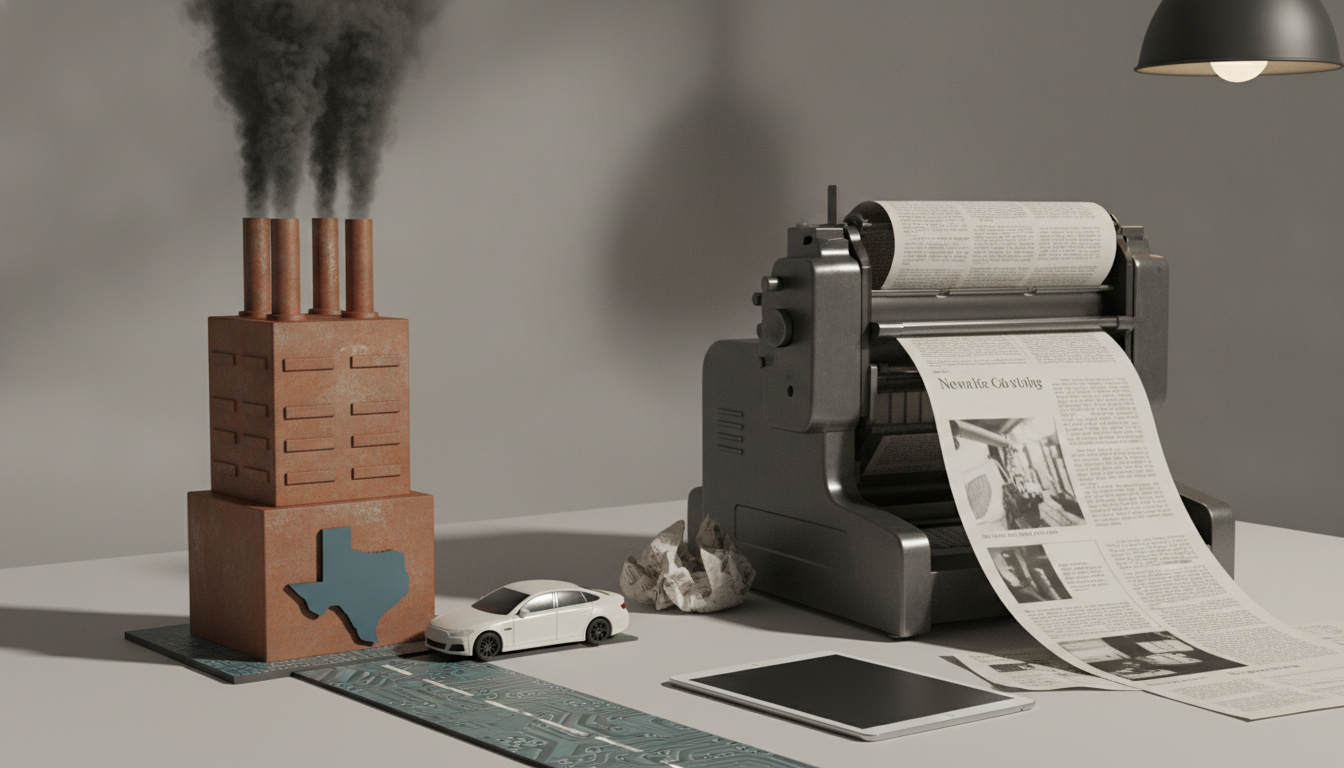
Amazon Texas Data Center: Amazon’s data center power plant raises pollution questions
The number matters less without context. But 33 million tons of potential annual carbon emissions demands one anyway. This story follows Amazon Texas Data Center.
That’s the permitted ceiling for GW Ranch, a new gas-burning power plant in Pecos County, Texas. Amazon is bankrolling the project to power a massive new data center nearby, according to reporting from The New York Times. If GW Ranch runs anywhere near its permitted limit, it would out-emit the largest coal plant in the country.
Why the Amazon data center plant stands out
The plant houses 35 natural-gas turbines. Together they can generate 7.65 gigawatts of electricity.
Most of that power flows directly to Amazon’s new facility, not the Texas grid. Cleanview, which tracks data center energy projects, flagged just how loose the plant’s emissions cap really is.
Plants rarely hit their maximum permitted output. Still, a cap this high signals regulators gave Amazon significant room to burn.
Amazon spokesperson Margaret Callahan told The Verge the company plans to add solar and battery storage on-site. She also said the campus will transition to grid power as interconnection timelines allow.
That’s a reasonable long-term plan. It doesn’t change what the plant emits in the near term.
The Climate Pledge tension
Amazon co-founded the Climate Pledge in 2019. Jeff Bezos promised the company would reach carbon neutrality by 2040.
Amazon’s emissions have climbed for several straight years since then. AI infrastructure spending is the primary driver.
Callahan acknowledged as much, telling the Times that “the world looks different now” than when the pledge began. That’s a candid admission, even if it stops short of a retreat.
Watch whether Amazon publishes actual emissions data from GW Ranch once it comes online. The gap between permitted and actual output will tell the real story.
Tesla Autopilot crash draws scrutiny from a public figure
San Francisco 49ers coach Kyle Shanahan crashed his Tesla near downtown Palo Alto last month. He initially said only that the accident was his fault.
In a recent press conference, Shanahan added a key detail. His Tesla’s Autopilot system was engaged at the time.
Shanahan said he’s used Autopilot for nine years and trusts it. He couldn’t say for certain whether the system malfunctioned or whether he accidentally disengaged it.
His framing matters here. Shanahan called driving with Autopilot “a partnership,” not a handoff to a computer.
That distinction sits at the center of ongoing debates over driver-assist systems. Tesla markets Autopilot as a convenience feature, not full autonomy, and keeps drivers legally responsible for crashes.
High-profile incidents like this one keep that responsibility question in public view. Expect continued scrutiny as regulators evaluate driver-assist safety data nationwide.
Amazon Texas Data Center: Smaller stories worth a beat
- Zuckerberg’s yacht skips a rescue: Tracking data reviewed by the Alaska Beacon and Halifax Shipping News shows Mark Zuckerberg’s superyacht, Launchpad, sat closer to a stranded skiff near Farragut Bay than the cruise ship that ultimately towed it to safety. A passenger said the Launchpad never responded to radio calls, drawing boos from onlookers.
- AI detectors erode trust: A Verge column this week traces how AI writing detectors have created a new layer of suspicion in classrooms and workplaces. False positives punish honest writers, while confident AI users learn to evade detection entirely.
- Dropbox becomes a builder’s safety net: A separate Verge piece makes the case for cloud backup as insurance against local hardware failure. For anyone assembling a new machine, pairing a reliable external SSD (paid link) with automated cloud sync closes the gap between convenience and disaster recovery.
Amazon Texas Data Center: Takeaways
Amazon’s data center ambitions keep colliding with its own climate commitments. The Pecos County plant is the clearest example yet.
Kyle Shanahan’s Tesla crash keeps driver-assist accountability in the headlines. Watch for how NHTSA and other regulators respond to similar incidents.
Small stories, like Zuckerberg’s yacht and AI detector distrust, still reveal something bigger. Tech’s biggest players face growing scrutiny over the gap between stated values and observed behavior.
As an Amazon Associate, TechMogo earns from qualifying purchases.