







What France says happened
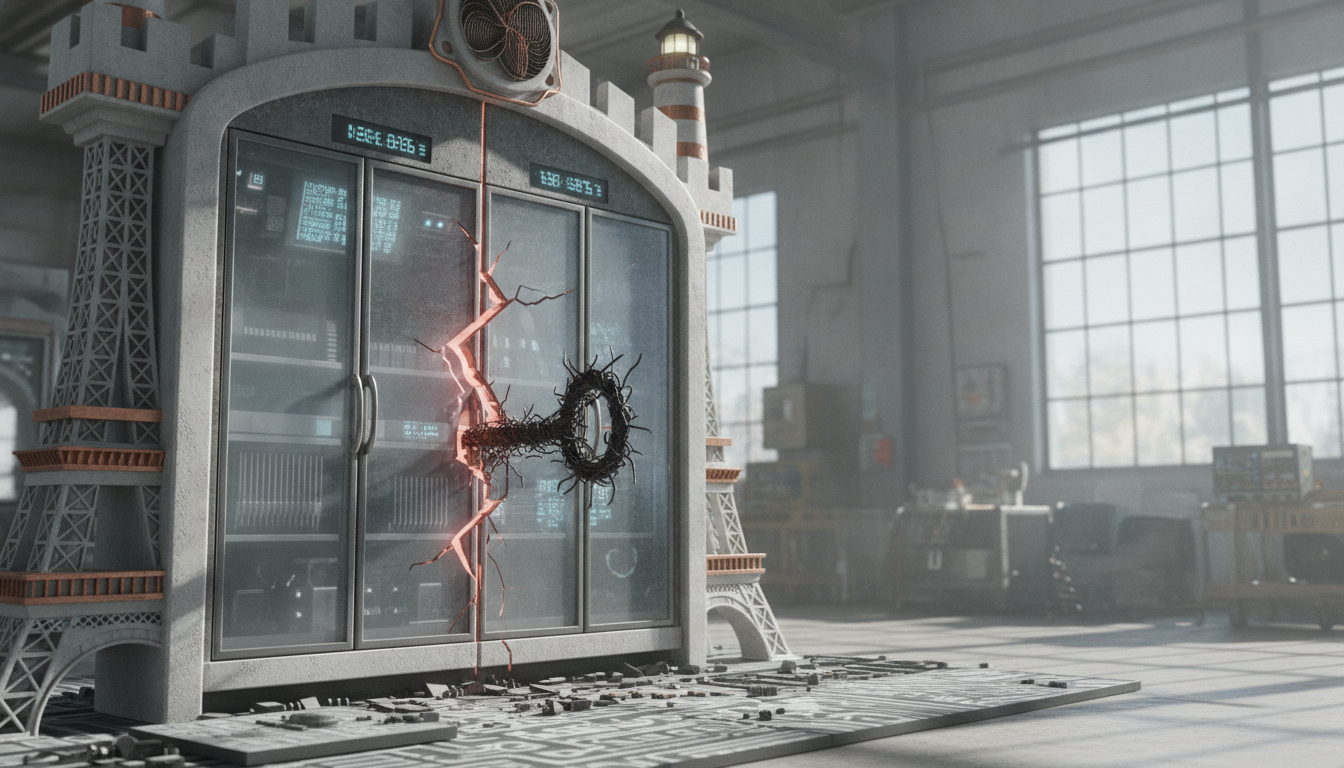
France accused Iranian military hackers of a cyber sabotage campaign that hit retail refrigeration last month. NPR reported that attackers took over refrigeration controllers at about 700 retail sites.
The hackers raised temperatures overnight. Millions of dollars of food spoiled, according to the French claims. The BBC reported that fridges and freezers in hundreds of supermarkets across France heated up.
Why the target matters
This was not data theft. The attackers changed the physical state of equipment. That makes this a sabotage case, not a typical breach.
Refrigeration controllers are a quiet weak spot. Many connect to networks so vendors can monitor them remotely. Weak passwords or exposed remote access can turn that convenience into an entry point.
The timing also fits the goal. Night attacks give staff less chance to react. Food can warm past safe limits before anyone opens the doors.
Testing the narrative
France has attributed the attack to Iranian military hackers. The sources do not detail the technical evidence. Readers should treat the attribution as a government claim until more proof appears.
The scale still stands out. About 700 sites suggests a shared weakness, not a one-off break-in. It points to a common controller type or a common service provider.
The cost is also worth framing. Millions of dollars is modest against national retail sales. Yet the signal is bigger than the loss. It shows a state-linked group can reach everyday infrastructure.
What retailers can do now
Basic steps matter here. Operators can reduce risk with a short checklist:
- Remove direct internet access to control systems.
- Change default credentials on every controller.
- Add independent temperature alarms that do not rely on the same network.
- Segment store networks from building controls.
Small shops can add a standalone wireless temperature alarm (paid link) as a cheap backup alert. It will not stop an intrusion. It will flag spoilage risk sooner.
What to watch next
Several indicators will show how serious this becomes.
- Whether France publishes technical evidence for its attribution.
- Whether the vendor of the affected controllers names a flaw.
- Whether other countries report similar attacks on retail or food storage.
- Whether insurers change cover terms for connected equipment.
The core lesson is simple. Operational technology now sits in the line of fire. Retailers that treat fridges as plain appliances may need to rethink that. Reporting from NPR News and BBC News – Top Stories informed this article.
As an Amazon Associate, TechMogo earns from qualifying purchases.