




Philips Hue Cuts Prices: Hue Goes Bigger by Getting Cheaper
Philips Hue smart lighting had a busy week at IFA. The brand rolled out cheaper TV-sync hardware, a natural-language AI feature, and a new architectural lighting line. Each announcement targets a different frustration longtime Hue smart lighting owners have voiced for years. This story follows Philips Hue Cuts Prices.
Let’s start with the wallet-friendly news. Philips Hue slashed the entry price for screen-syncing gear, according to The Verge. The new Sync Box 4K starts at $150. Compare that to the $385 price tag on the older 8K model.
A Camera-Based Option Finally Arrives
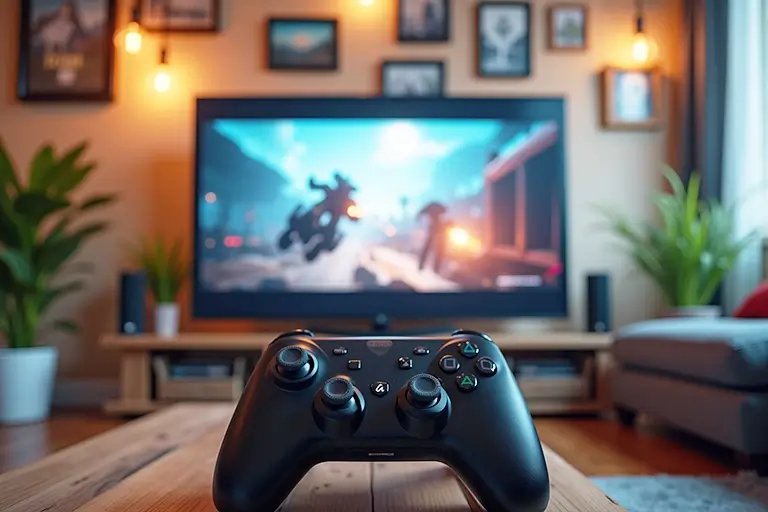
Hue also launched its first camera-based sync solution, called Play Screen Sync. It costs $119.99. Instead of plugging into your HDMI chain, a camera reads your screen’s colors directly and mirrors them onto your lights.
This matters for anyone who juggles multiple sources, like a streaming stick, a game console, and a cable box. A camera-based system skips the HDMI pass-through headache entirely. For casual users who just want ambient glow during movie night, that simplicity could win them over.
Custom AI Behaviors Change How You Talk to Your Lights
The bigger philosophical shift is Custom AI Behaviors. Hue’s assistant now builds automations from plain-language descriptions, as detailed by The Verge. You no longer need to manually chain triggers and conditions in the app.
Instead, you describe the outcome you want. The system figures out the automation logic behind it. Hue says this unlocks routines that were technically impossible in the old scene-builder interface.
This fits a broader pattern across the smart home industry. Companies increasingly bet that natural language, not menus, will be how people control their homes. Amazon, Google, and Apple have all pushed similar conversational controls this year.
Liane Rope Lights Target Design-Conscious Buyers
Hue’s third launch addresses a quieter complaint: most smart lighting looks like it belongs in a dorm room. The new Liane rope lights lean into architecture instead of novelty, according to The Verge‘s hands-on report.
The line wraps flexible, 360-degree lighting around furniture, shelving, and trim. For homeowners who want smart lighting without a gamer aesthetic, this fills a real gap. Meanwhile, if you’re building out a full home theater setup, pairing these fixtures with a soundbar (paid link) can round out the ambient lighting layer around your screen.
Why the Timing Makes Sense
None of this happens in a vacuum. Smart home competition keeps intensifying, and price has become the biggest barrier to entry. By undercutting its own premium hardware, Hue smart lighting essentially admits that $385 was scaring away casual buyers.
The AI behaviors feature also signals where the company sees its future. Hue isn’t just selling bulbs anymore. It’s selling an assistant that manages your home’s mood.
Philips Hue Cuts Prices: Elsewhere in Tech: Gemini and Ravenloft
Google also shipped Gemini 3.8 Flash this week, just weeks after 3.7 Flash launched. Google claims the model reasons through more steps and calls tools iteratively, though pricing may climb from the current $0.75 per million input tokens.
And Dungeons & Dragons fans got their own headline. Netflix confirmed a live-action Ravenloft series from Alfonso Cuarón and John August, per Deadline. The gothic horror setting recently got a refresh with Ravenloft: The Horrors Within.
Philips Hue Cuts Prices: Key Takeaways
- Philips Hue’s Sync Box 4K starts at $150, undercutting the $385 8K model.
- Play Screen Sync brings camera-based lighting sync for $119.99.
- Custom AI Behaviors lets users build automations through plain language.
- Liane rope lights target design-focused buyers, not just gamers.
Together, these moves show Philips Hue smart lighting chasing both affordability and sophistication at once. Whether casual buyers actually adopt AI-built automations remains the real test ahead.
As an Amazon Associate, TechMogo earns from qualifying purchases.