










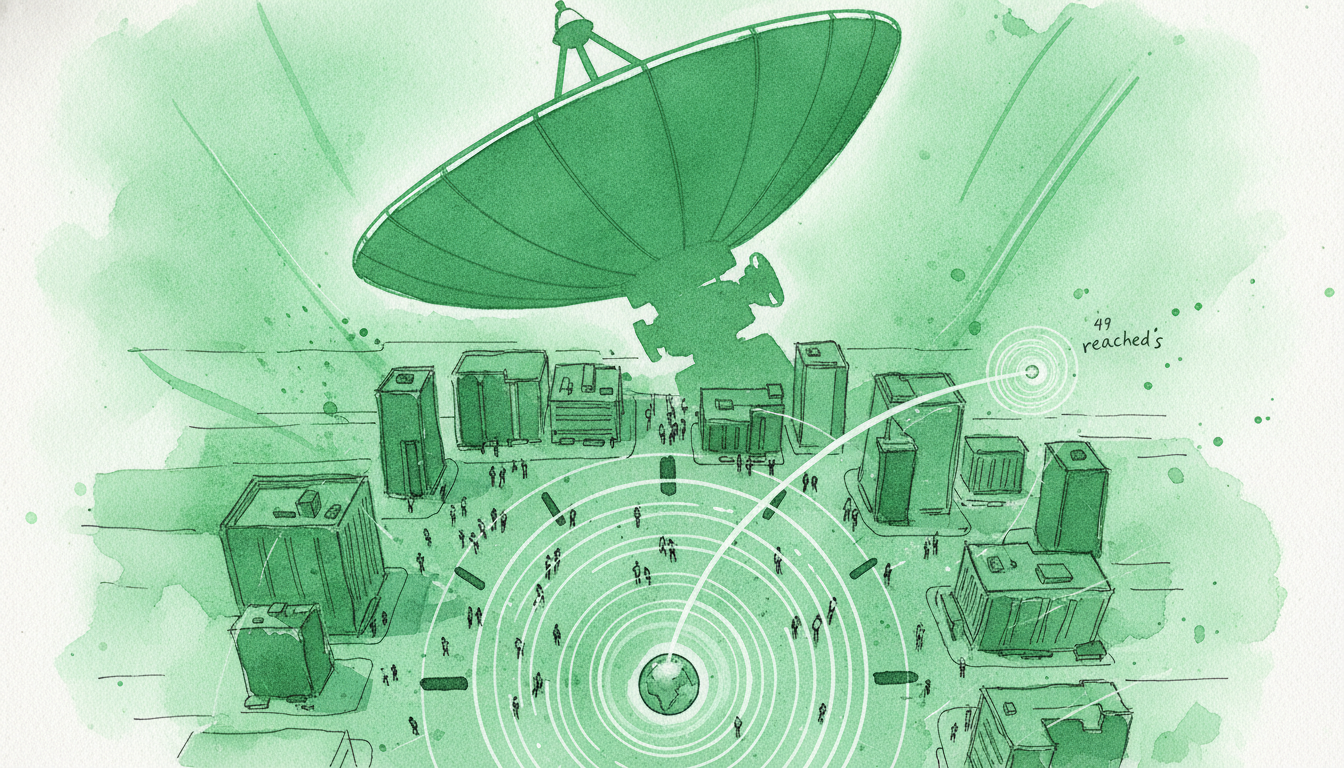
Voyager 1 crosses a historic distance
Voyager 1 is now one light-day from Earth. NASA’s farthest probe reached the mark at 5:16 a.m. ET on Wednesday, as The Verge reported.
The spacecraft sits about 16.094 billion miles away. A radio signal now needs a full 24 hours to reach it.
What one light-day means
A light-day is the distance light travels in one day. Radio waves move at the same speed.
Engineers on Earth therefore wait a day to send a command. They then wait another day for a reply.
That round trip takes about two days. Every instruction has to be right the first time.
Key facts
- Distance: roughly 16.094 billion miles from Earth.
- Time in flight: 49 years.
- One-way signal time: about 24 hours.
- Milestone reached: Wednesday, 5:16 a.m. ET.
The Golden Record still rides along
Voyager 1 carries the Golden Record. The disc holds sounds and images from Earth.
Ars Technica spoke with a historian about the record’s lesser-known details. The people behind it expect the disc to last a very long time.
That durability matters. The probe will likely outlive its power supply by a wide margin. The record could then drift through space for ages.
Why this milestone matters
Voyager 1 launched in 1977. Its hardware is older than most of today’s engineers.
Yet it still talks to Earth. Each year, the team has to manage fading power and aging parts with care.
The light-day mark also shows how far humans have reached. No other spacecraft has gone this far.
Still, the distance is tiny on a cosmic scale. The nearest star is more than four light-years away.
Takeaways
- Voyager 1 is the first spacecraft to hit one light-day.
- Commands take a full day to arrive.
- The Golden Record should outlast the mission.
- Power limits will eventually end the signal.
For now, the probe keeps sending data. Each day adds more distance to a record nobody else holds.