








The camera industry news cycle got crowded this week. A podcast asked a big-picture question about legacy. A startup shipped something genuinely new. And two established players just kept grinding on the fundamentals. This story follows AI Editing DxO 10.
That mix says a lot about where the camera industry stands right now. Companies are chasing AI features while still refining the boring stuff that actually matters, like glass and RAW processing.
AI Editing DxO 10: Who Actually Shaped the Camera Industry?
The PetaPixel Podcast spent an episode ranking the most influential camera brand of every decade since the mid-1900s, as detailed in their recent episode. Influence, not sales, was the metric. That distinction matters more than it sounds.
Plenty of brands sold more units than the companies that actually pushed the camera industry forward. Kodak dominated shelves for decades. But brands like Nikon, Canon, and later Sony often set the direction everyone else followed.
This kind of retrospective feels timely. The camera industry is at another inflection point right now, thanks to AI. Twenty years from now, someone will record a podcast asking which brand mattered most in the 2020s. Based on this week’s news, that list just got more interesting.
Caira Brings AI Video Editing Into the Camera Body
Camera Intelligence unveiled something the camera industry hasn’t seen before. Its Micro Four Thirds camera, Caira, now ships with built-in generative AI video editing.
According to PetaPixel’s coverage, this makes Caira the first mirrorless system to build generative editing directly into the hardware. That’s a meaningful first for the camera industry, not just a marketing line.
Most creators currently shoot footage, then move to a laptop for editing. Caira wants to collapse that workflow into one device. Whether photographers actually want AI generating edits inside their camera is a separate question.
Still, the timing tracks. AI-native products are showing up everywhere this year, from phones to laptops. A camera built around generative tools was probably inevitable.
The real test will be output quality, not the pitch. Generative video tools still stumble on consistency and realistic motion. If Caira nails that, other manufacturers will scramble to copy it fast.
DxO PhotoLab 10 Focuses on Depth, Not Hype
DxO took a quieter approach with PhotoLab 10, its flagship photo-editing software. The company rolled out AI add-ons, improved masking, and updated color grading tools this week.
PetaPixel’s hands-on review called this update less dramatic than past releases. Instead, DxO patched gaps that earlier versions left open, particularly around RAW image handling.
That’s the right call, honestly. DxO’s pitch has always been simple: pay once, keep that version forever. Upgrades cost extra, usually around half the original price, but there’s no subscription trap.
In a software market obsessed with monthly fees, that model stands out. Adobe’s Lightroom still dominates mindshare, but plenty of photographers resent the subscription treadmill.
According to the official release details, the new AI-driven masking tools aim for a tighter editing workflow overall. That’s a smart move for photographers who shoot RAW and want more control.
If you’re building out a home editing setup, having reliable external hard drive for photo backups (paid link) on hand still matters more than any single software update.
Sigma Expands the Aizu Prime Cine Lineup
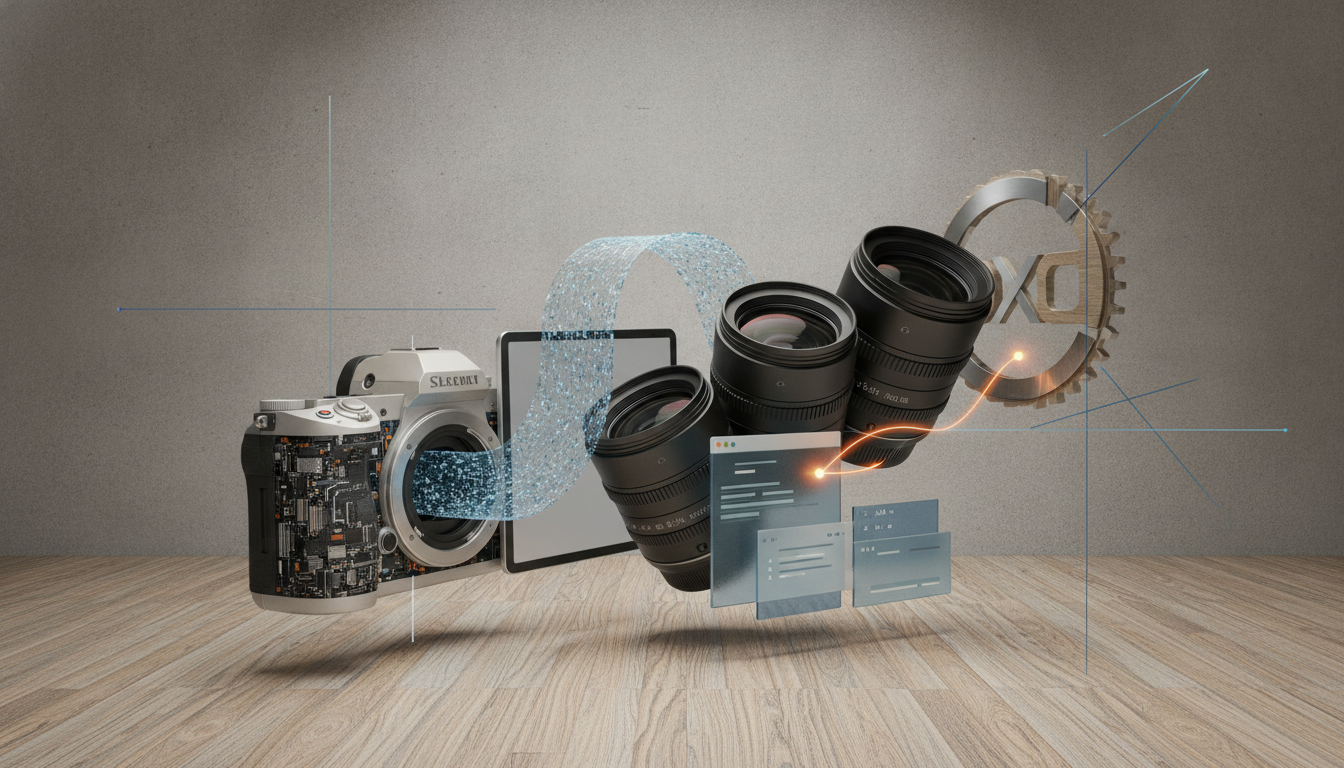
Meanwhile, on the hardware side, Sigma quietly strengthened its position in cinema lenses. The company added three new Aizu Prime lenses: a 21mm, 100mm, and 125mm, all at T1.3.
These join eight existing Aizu lenses that previously covered 25mm to 75mm, according to PetaPixel’s report on the announcement. That fills in both the wide and telephoto ends of the range.
This isn’t flashy news. No AI, no generative anything. But it matters for working cinematographers who need a complete, matched set of primes for professional productions.
Sigma has been quietly building serious credibility in cinema glass over the past several years. This expansion cements that reputation further. Filmmakers now get a genuinely versatile lineup without switching brands mid-shoot.
AI Editing DxO 10: What This Week Says About the Camera Industry
Put these stories together and a pattern emerges. The camera industry is splitting into two camps right now.
One camp chases AI-native hardware, like Camera Intelligence’s Caira. The other refines proven tools, like DxO’s software and Sigma’s cine lenses.
Neither approach is wrong. History, as the PetaPixel Podcast pointed out, favors brands that push the camera industry in new directions. But not every push needs to involve generative AI.
Sometimes influence looks like a better masking tool. Sometimes it looks like three new prime lenses. And sometimes it looks like a camera that edits its own footage.
AI Editing DxO 10: Takeaways for Photographers and Filmmakers
Here’s what actually matters if you’re shopping or upgrading this year:
- Caira is worth watching, but wait for real-world footage before trusting AI-generated edits.
- DxO PhotoLab 10 makes sense if you hate subscriptions and shoot mostly RAW files.
- Sigma’s Aizu Prime expansion is a genuine win for cinematographers needing a complete kit.
- The camera industry’s next big shift will likely come from AI, but hardware fundamentals still count.
If you’re assembling a full production kit, don’t overlook a solid camera bag (paid link) for on-location shoots. And if Caira’s approach catches on, expect competitors to announce their own AI-powered mirrorless camera (paid link) within the next year.
None of this week’s news is revolutionary on its own. Together, though, it paints a clear picture of where the camera industry is heading next.
As an Amazon Associate, TechMogo earns from qualifying purchases.