










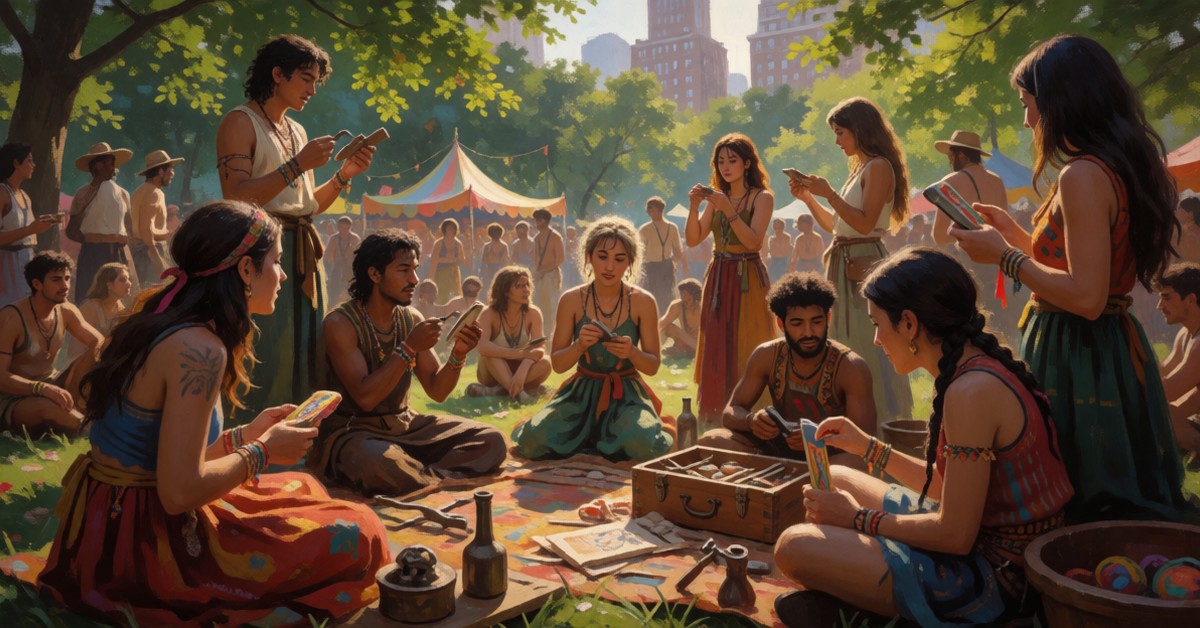
New York City’s Summer of Ludd festival offers attendees a structured escape from the constant digital noise that many people feel overwhelms their daily routines. This gathering, often described as a luddite festival gen z gathering, teaches participants how to engage with life without relying on screens or constant internet connectivity. Organizers claim the event provides a necessary pause, allowing visitors to reconnect with analog experiences in an increasingly digital world. The festival taps into a growing sentiment among younger generations who question the pervasive influence of large technology corporations on personal freedom and daily existence.
The Digital Detox Movement
Many attendees arrive at the Summer of Ludd seeking a reprieve from the relentless demands of big tech, which they believe controls too much of the modern experience. The festival emphasizes activities that require physical presence and real-world interaction, contrasting sharply with virtual communication. Participants learn how to focus on the present moment by abandoning smartphones and digital notifications for several days. This deliberate disconnection serves as a direct response to the constant information stream that characterizes contemporary life.

This push toward offline living is not merely a vacation; it represents a deeper cultural critique of how corporations monetize personal time. The movement suggests that constant connectivity erodes genuine human connection, which is a central theme of the luddite festival gen z movement. Attendees find ways to rediscover hobbies that do not involve a screen, such as gardening or traditional crafts. These activities allow individuals to feel a sense of accomplishment that digital interactions rarely provide.
Why Are People Choosing Analog Life?
People are seeking the Summer of Ludd because many feel that digital life has become overly managed by powerful companies. The festival provides a safe space where participants can temporarily reject the digital status quo and explore alternative ways of being. Critics argue that this desire for simplicity stems from a feeling of loss regarding personal autonomy in the digital age. The festival promotes the idea that true freedom requires limiting the tools that large companies provide to us.
For many, the experience is a form of rebellion against the algorithmic systems that decide what information they see. The Summer of Ludd hosts workshops that teach skills that were once common but have since been replaced by digital convenience. These skills include: Manual navigation without GPS assistance. Cooking and crafting without relying on online instructions. Engaging in deep conversation without checking social media.
These activities promote a slower pace, which many find restorative after years of fast-paced digital consumption. The organizers believe that by experiencing life offline, people gain a clearer perspective on their dependence on technology. This perspective is central to the appeal of the luddite festival gen z scene.
Challenging Big Tech’s Control
The core of the luddite festival gen z movement is the shared frustration with the business models of major technology firms. Participants claim that these companies prioritize data collection and advertising revenue over user well-being. The festival serves as a gathering point for individuals who feel their privacy is constantly at risk due to software updates and data tracking. The Summer of Ludd encourages a collective questioning of whether the benefits of technology outweigh the costs to human attention and mental health.

This skepticism extends to the very concept of convenience, which the festival argues often masks a form of digital servitude. The festival teaches skills that require patience and effort, which is a direct counterpoint to the instant gratification offered by apps. By engaging in these tasks, participants learn to value the process more than the immediate outcome. The narrative surrounding the luddite festival gen z suggests that true fulfillment lies outside of digital metrics and likes.
The Future of the Digital Divide
As more people seek experiences like the Summer of Ludd, the divide between digital natives and those who choose analog life continues to widen. While some view this movement as a necessary corrective to modern excesses, others see it as an impractical retreat from the efficiencies technology provides. The Summer of Ludd claims it is not about rejecting progress entirely, but rather about regaining control over one’s attention. This distinction is important for understanding the goals of the luddite festival gen z movement.
The festival highlights that technology is a tool, not a destiny, which is a message that resonates strongly with those who feel overwhelmed. By setting aside time for the offline experience, attendees can reassess how they use their devices. They learn to set boundaries against the constant pull of notifications and updates. This conscious effort to limit digital input helps attendees regain a sense of personal agency. The festival provides the space for this important self-reflection.
Finding Balance in a Connected World
The organizers of the Summer of Ludd emphasize that the goal is not permanent isolation, but rather the creation of intentional balance. They suggest that if we are not careful, the tools designed to help us can eventually become the things that control us. The festival provides a temporary reset button for a population that feels perpetually ‘on.’ This experience is marketed as a chance to reclaim time lost to endless scrolling and digital distractions. The message of the luddite festival gen z is that the best moments often happen when the screen goes dark.
This growing interest in unplugging reflects a broader cultural shift toward valuing well-being over constant productivity, which is something many modern workers struggle with. The festival offers a structured way to practice this balance, proving that people are willing to actively work toward a less digitally dependent existence. The Summer of Ludd acts as a temporary sanctuary for those who want to test the limits of a truly disconnected life, offering a glimpse into a different way of living. For related coverage, see tech coverage.