







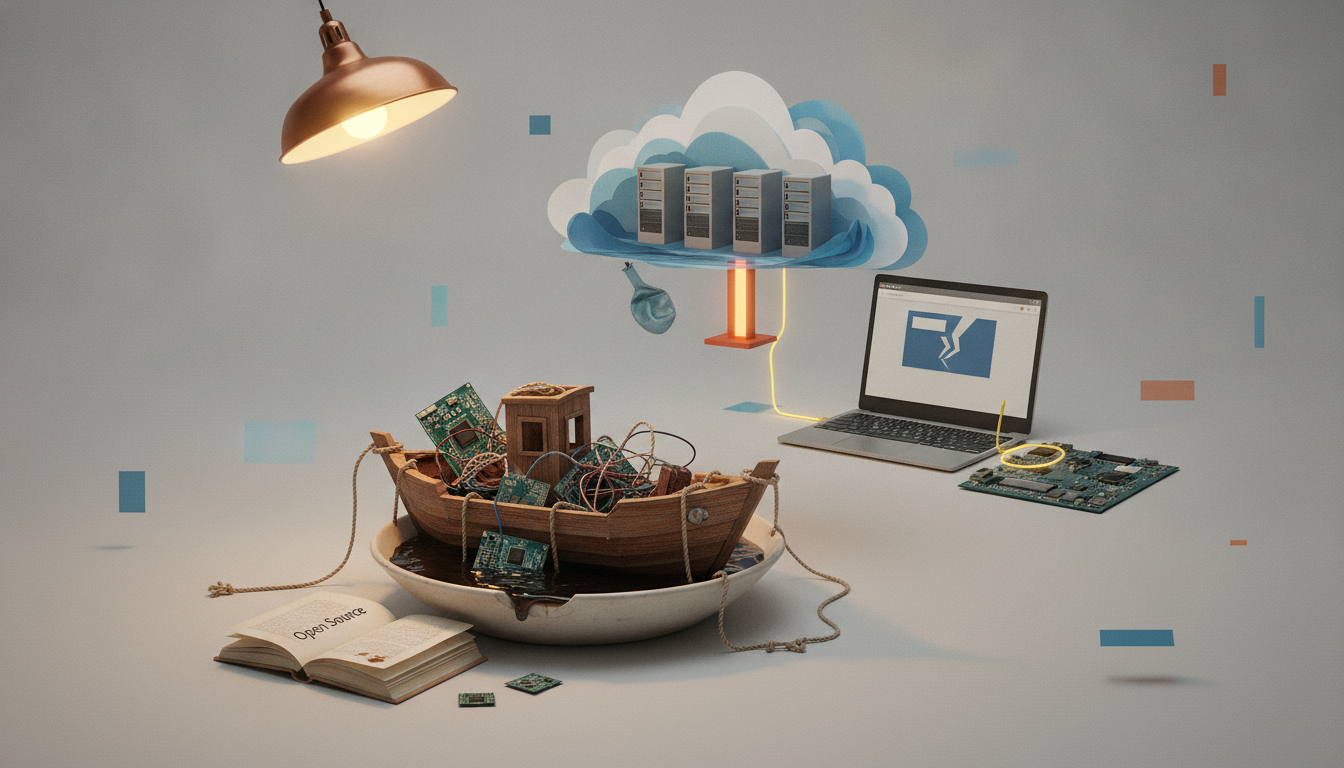
Open source sustainability sounds abstract until a maintainer runs out of money. This week gave us three separate reminders of that reality. A free Persian ERP tool is asking users for donations to survive. Deno’s entire team just joined Cloudflare. And a developer is benchmarking whether AI code reviewers can be trusted at all. None of these stories trend on their own. Together, they describe the same problem: software needs upkeep long after the demo ends.
Open Source Sustainability: The Hidden Cost of a Free ERP Tool
Abrak, a free Persian-language ERP program, is running on fumes. According to a post on Dev.to, the sole developer has personally covered hosting and AI costs. No government grant backed the work. No private institution stepped in either.
That developer now asks users directly for donations. The plan spans 90 days and lays out exactly where the money goes. It’s an unusually transparent approach to a very common crisis.
Why This Matters Beyond One Project
Free business software carries real operating costs. Servers, AI inference, and bandwidth all bill monthly, regardless of donations. Many teams quietly rely on unpaid labor from a single person. When that person runs dry, the tool simply stops.
This is the uncomfortable side of open source sustainability. Users expect free forever, but infrastructure never is. Abrak’s situation shows what happens when goodwill meets a real invoice.
Deno’s Team Moves to Cloudflare
A bigger shake-up hit the JavaScript runtime world this week. Ryan Dahl, Node.js co-creator and Deno’s founder, announced the entire Deno team now joins Cloudflare. The move targets a new platform called Celld, built to simplify distributed application scaling, as reported by Dev.to.
Deno Deploy will shut down within six months. That timeline matters enormously for developers who built products on top of it. Migration windows always sound generous until you’re the one migrating.
What Acquisitions Mean for Long-Term Users
Cloudflare gains serious runtime talent through this deal. But every acquisition like this raises the same question for existing users. Does the acquired product survive, or does it get folded away quietly?
Open source sustainability isn’t only about money. It’s also about whether a company’s roadmap still matches the community’s needs. Deno users now face a six-month countdown to figure that out.
Can AI Agents Be Trusted to Review Code?
A third story complicates the sustainability picture further. A developer on Dev.to benchmarked AI agents auditing pull requests. The goal was spotting a specific failure mode called helpful hallucination.
Essentially, models sometimes invent fake security flaws in clean code. They seem to feel obligated to flag something, anything, to justify their output. That habit erodes trust in automated review pipelines over time.
Maintenance Debt Meets AI Tooling
Teams increasingly lean on AI agents to handle code review at scale. If maintainers can’t trust those agents, they add work instead of removing it. That defeats the entire purpose of automation.
This connects directly back to open source sustainability. Maintainers already stretched thin cannot afford tools that generate false alarms. Reliable AI review could ease burnout for solo developers like Abrak’s creator. Unreliable AI review just adds another chore to an already long list.
Open Source Sustainability: A Smaller Bug With a Bigger Lesson
One more story this week deserves a mention, even if it’s niche. A developer documented a native code bug where a debug build looked fine. Under optimization, a background flush printed garbage data instead.
The root cause involved a view object outliving the memory it pointed to. It’s a classic lifetime bug, the kind that hides until production traffic finds it. Reliability work like this rarely gets praise, but it keeps software trustworthy.
Open Source Sustainability: Reading These Stories Together
Each story looks unrelated on the surface. Together, they sketch the real shape of modern software maintenance.
- Free tools need funding models, not just goodwill
- Acquisitions can end products with short notice
- AI review tools need trust, not just speed
- Low-level bugs still threaten reliability at scale
Open source sustainability sits underneath all of it. It’s the unglamorous work of keeping things running after launch day ends. Developers using any of these tools in production should plan accordingly.
For teams building on free infrastructure, a server monitoring software (paid link) setup can help track uptime and catch failures early. That kind of monitoring matters more once a maintainer’s resources run thin.
Open Source Sustainability: Takeaways
Software longevity depends on boring, unglamorous support. Donations, acquisitions, and code review tools all shape whether a project survives.
- Abrak needs direct donations within 90 days to continue operating
- Deno Deploy closes in six months after the Cloudflare move
- AI PR reviewers still hallucinate flaws in clean code
- Memory lifetime bugs remain a quiet but serious risk
Open source sustainability isn’t a one-time fix. It’s an ongoing negotiation between users, maintainers, and whoever ends up paying the bill.
As an Amazon Associate, TechMogo earns from qualifying purchases.