









Running Ollama AMD GPUs: Local AI models are having a moment
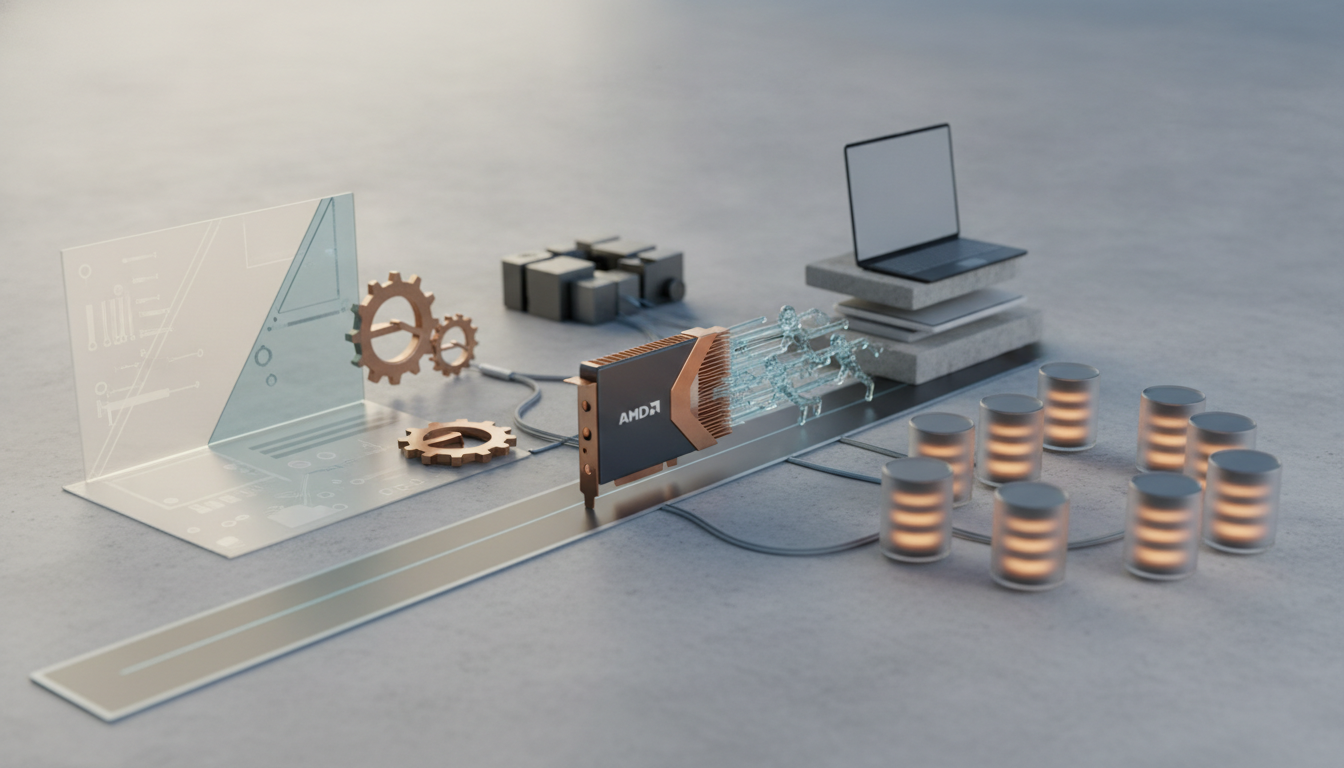
Local AI models keep grabbing headlines this week. One developer wanted to run local AI models on his own gaming rig instead of waiting for work downtime. According to a walkthrough on Dev.to, he got Ollama working on an AMD Radeon RX 9060 XT. He used WSL and ROCm to make it happen. That detail matters. Most local AI tutorials assume you own an Nvidia card. This one proves AMD hardware can handle local AI models too, with some extra setup work. This story follows Running Ollama AMD GPUs.
Why this matters for AMD owners
Nvidia has long dominated the local AI models conversation because of CUDA support. ROCm, AMD’s answer to CUDA, has historically lagged in compatibility. This writeup shows the gap is narrowing. If you already own a AMD Radeon RX 9060 XT graphics card (paid link) for gaming, you may not need a separate card just to experiment with local AI models. That said, expect some driver wrangling. WSL adds another layer of complexity on Windows machines.
Deterministic code still beats model judgment
Not every AI story this week is about hardware. A support-agent project documented in an architecture decision record explains why refund eligibility should never be an LLM’s call. As detailed on Dev.to, the team routes refund logic through deterministic Java code instead. The model handles conversation. The software handles money decisions. It’s a smart boundary, and one I wish more AI-agent builders would adopt. Letting a language model approve financial transactions invites inconsistency and risk. This project treats the model as a translator, not a judge.
A pattern worth copying
The broader lesson applies well beyond refunds. Any system pairing an LLM with real consequences needs a hard line somewhere. Facts with high stakes belong to deterministic software. Ambiguous, low-stakes tasks can stay with the model. That split keeps costly mistakes out of a chatbot’s hands.
Agent skills are shaping how software looks and works
Anthropic quietly shipped a skill for Claude Code called frontend-design. As reported by Skillselion, it has over 825,000 installs already. The skill is just 55 lines of prose. It names three cliché “AI looks,” complete with hex codes, and tells the agent to avoid them. No scripts, no component library, just guardrails against generic design output. This is a small but telling sign of where agent tooling is headed. Developers don’t always want more automation. Sometimes they want the automation to stop repeating itself.
Monorepo pipelines face similar scrutiny
Meanwhile, a separate report on EventCatalog pressure-tests how generated code moves through a monorepo. The piece, also on Dev.to, found that a producer can pass its checks while a downstream consumer still breaks. Green builds don’t guarantee working software. That’s an uncomfortable but useful reminder for any team leaning on generated artifacts across sibling packages.
Running Ollama AMD GPUs: Verification headaches for non-VoIP numbers
On a more practical note, a guide explains why OpenAI, WhatsApp, and other platforms reject virtual phone numbers. Per the writeup on Dev.to, VoIP numbers from services like Google Voice or TextNow often fail verification. Platforms increasingly demand carrier-issued, non-VoIP numbers to cut down on fraud and spam accounts. If you’re testing an app that touches OpenAI or WhatsApp APIs, plan for this early. A cheap virtual number will save you money but cost you hours of troubleshooting later.
Running Ollama AMD GPUs: What ties these stories together
Every story here circles back to one theme: local AI models are maturing past the demo stage. People run local AI models on consumer GPUs now, not just cloud servers. Teams building agents are drawing firm lines between model judgment and deterministic logic. Even design and verification tooling is adapting to real-world friction. None of this is glamorous keynote material. It’s the unglamorous plumbing that makes local AI models and agent tools actually usable day to day.
Running Ollama AMD GPUs: Who should pay attention
Developers experimenting with local AI models on AMD hardware should bookmark that ROCm walkthrough. Teams building customer-facing agents should study the refund ADR closely. And anyone juggling phone verification for AI platforms needs a real carrier number, not a virtual one. If you’re assembling a home AI rig, a solid gaming desktop PC (paid link) and enough system memory (paid link) will matter more than brand loyalty. The common denominator is discipline. Local AI models reward people willing to do the unsexy setup work.
As an Amazon Associate, TechMogo earns from qualifying purchases.