






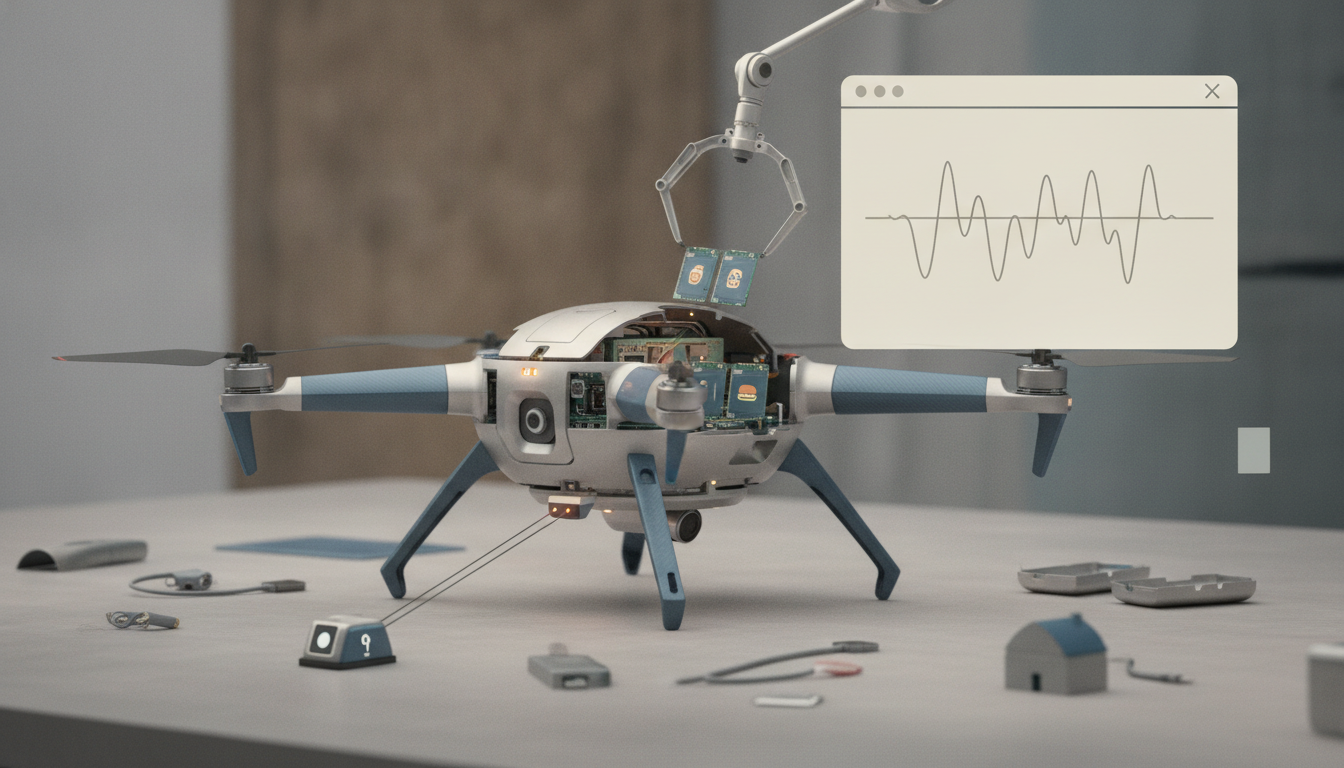
Uber wants to drop your dinner from the sky. The company announced a partnership with drone delivery firm Zipline, aiming for one million daily drone deliveries by 2029, according to The Verge. Uber is also making a strategic investment in Zipline, which has run drone deliveries in Texas since 2025. This story follows Uber Eats Drone Delivery.
The plan sounds thrilling on stage. But the real story starts after the keynote ends, once actual meals fly over actual neighborhoods.
What the Uber Eats Drone Delivery Deal Actually Covers
Uber Eats drone delivery will launch later this year, starting with a limited service area. Zipline already handles thousands of flights for retail and healthcare clients. Its aircraft use a tethered droid to lower packages gently to the ground.
That detail matters more than headlines suggest. A soft landing system reduces damage risk to food packaging and nearby property.
Uber’s one-million-a-day target sits five years out, in 2029. That timeline gives regulators, neighborhoods, and Uber itself room to adjust before scale arrives.
Noise, Access, and Who Gets Left Out
Drone delivery promises speed. It does not automatically promise fairness.
Rural and low-density suburbs often see infrastructure pilots first, since flight paths avoid tall buildings. Dense urban cores, where many renters and lower-income households live, may wait years longer.
Accessibility is part of performance here, not an afterthought. A drone that lands in a shared driveway or apartment courtyard creates a very different experience than one landing on a private lawn.
People using wheelchairs, older adults, or anyone without easy outdoor access need a clear plan for retrieval. Uber has not detailed how it will handle multi-unit buildings or accessibility accommodations yet.
Noise Is a Design Problem, Too
Zipline’s aircraft cruise quietly compared to typical delivery drones. Still, hundreds of daily flights over one neighborhood add up acoustically.
Repeated noise exposure disproportionately affects people who cannot easily relocate. That includes renters, shift workers who sleep during the day, and households near flight corridors.
Repairability and the Hardware Behind the Promise
Repairability changes the value equation for any hardware-heavy service. Zipline’s fleet includes reusable aircraft and ground stations built for thousands of cycles.
Long-term value depends on how easily technicians can service these machines. It also depends on whether Uber and Zipline plan for parts availability a decade from now.
Uber Eats drone delivery will only reach real scale if the underlying hardware survives daily wear. Extreme heat, dust, and storms all test durability constantly.
Zipline’s Texas operations since 2025 offer an early real-world stress test. That track record matters more than any demo video.
Environmental Claims Need Scrutiny
The material claim needs context before anyone celebrates. Drone delivery advocates often tout lower emissions compared to car-based delivery.
That comparison only holds when drones replace car trips rather than adding new ones. If people start ordering food they would have skipped otherwise, net emissions could rise.
Manufacturing and battery production for thousands of new aircraft also carry a footprint. Uber has not published lifecycle emissions data for this partnership yet.
Beyond Food: A Wider Pattern in Tech This Week
Uber Eats drone delivery is not the only ambitious system launching this week. Elsewhere in tech, builders are experimenting with new ways to verify trust and memory.
One developer published a public identity-depth scorer, an experimental tool measuring how expensive a digital history would be to fake, as detailed on Dev.to. Instead of credentials or captchas, it scores behavior across several independent dimensions.
Meanwhile, a separate project called Good Boy Amnesia turns AI agent memory into a literal game mechanic. Players navigate a dog’s corrupted memory graph, visualized in 3D, according to its Dev.to submission.
Both projects reflect a growing focus on systems that fail gracefully. Engineers are also building event-driven AI agent architectures designed to survive production outages rather than crash silently.
That same philosophy should apply to physical infrastructure like delivery drones. Systems need to recover from bad weather, GPS drift, or communication loss without dropping a customer’s lunch.
Uber Eats Drone Delivery: Long-Term Support Life Is the Real Test
Longevity is the hidden specification in any ambitious rollout. Uber’s five-year runway to one million daily deliveries gives the company time to fix early mistakes.
But it also means today’s pilot customers become the testers. Early adopters may want a reliable outdoor security camera (paid link) nearby to track outdoor deliveries and confirm safe landings on their property.
Support life matters for drone hardware just as much as for phones or laptops. Will Zipline commit to years of firmware updates and safety patches?
Will replacement parts stay available if Uber’s investment shifts priorities later? These questions matter more than launch-day excitement.
Uber Eats Drone Delivery: Takeaways
Uber Eats drone delivery arrives with genuine ambition and real infrastructure behind it.
- Zipline’s proven Texas operations suggest the hardware can handle real-world conditions.
- Accessibility and noise impacts on dense neighborhoods remain unresolved.
- Environmental benefits depend entirely on replacing car trips, not adding new orders.
- Long-term repairability and support commitments will determine lasting value.
Good design earns its reputation after the unboxing, not during the announcement. Uber Eats drone delivery deserves the same scrutiny once the novelty wears off.
As an Amazon Associate, TechMogo earns from qualifying purchases.