










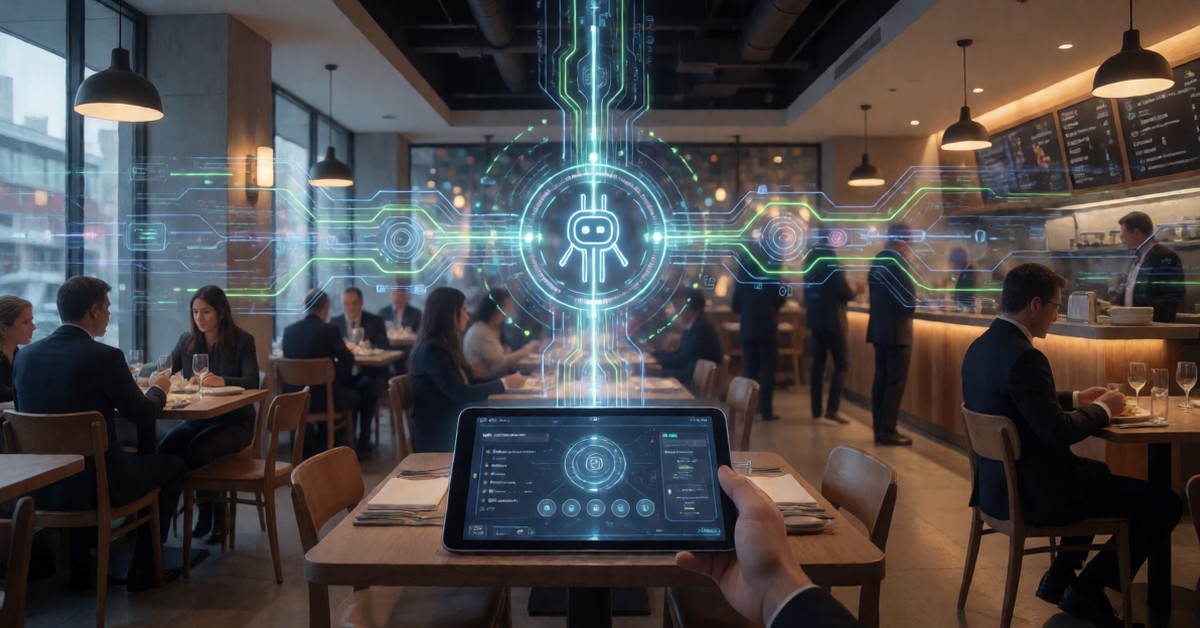
Square recently launched a new application and plugin for ChatGPT and Claude, which allows users to discover local restaurants and place orders directly within these AI platforms, a feature called square ai ordering. This technology enables restaurants to receive orders from autonomous agents without needing complex technical setups or expensive developer teams. Square claims that this shift helps businesses accept orders from AI users while eliminating the traditional marketplace commission fees that have long burdened the food and beverage sector.
This development marks a move away from traditional third-party delivery services, which historically take a large cut of a restaurant’s revenue. While major delivery apps charge high commissions, Square‘s new system integrates directly into the existing Square catalog to manage the entire ordering process. The system dynamically pulls live data, including prices, available items, and current stock, ensuring that AI agents never suggest out-of-stock inventory.

How Square AI Ordering Works
Square’s new integration is currently available for food and beverage sellers in the United States who already use Square Online Ordering. The entire process operates in the background, meaning the seller manages their menus, pricing, and hours through their established Square Dashboard. When a customer prompts ChatGPT or Claude to find a specific type of food, the AI parses the real-time data provided by Square. Customers can then browse the results, make their choices, and finalize the purchase inside the chat window, often using Order by Cash App.
This transaction then flows instantly into the seller’s existing operational flow, appearing on their Square Point of Sale and Kitchen Display System just like a regular direct order. Square’s backend reporting clearly tags the origin of the order as an AI integration, helping operators track the return on this new sales channel. Square claims this focus on agentic commerce helps sellers connect with customers in their communities and keeps them at the industry’s cutting edge.
The Financial Relief For Restaurants
Restaurant owners often face severe economic challenges because of the current delivery market structure. Third-party delivery apps fundamentally changed the business economics by introducing high fees for visibility and fulfillment. Aggregators bundle the costs of gig-worker fleets, platform marketing, and search placement into a single revenue-sharing model that heavily favors the platform.
For example, DoorDash charges restaurants a 15% commission on its basic delivery tier, which increases to 25% for its plus tier and 30% for the premier visibility plan. Uber Eats similarly charges standard delivery marketplace fees ranging from 20% on its lite tier up to 30% for premium placement. Grubhub also takes between 5% and 20% of the total order value depending on the specific marketing and delivery package the restaurant selects. On top of these commissions, platforms add their own payment processing fees, which typically amount to around 2.5% to 3.05% plus a fixed cent amount per order.
For a small independent restaurant that might only clear 3% to 9% net profit on a good day, handing over a 30% commission on a $40 digital order essentially means they are preparing food at a loss. Square’s new integration directly targets this critical financial pain point by removing the marketplace commission. Instead, a restaurant discovered through an AI agent only pays Square’s standard online transaction processing fee, which typically sits around 2.9% plus 30 cents per transaction on a standard plan, without any added marketplace commission.

Unlike The Traditional Delivery Aggregators
Unlike the traditional delivery aggregators, Square’s fee model does not rely on subsidizing a driver network. If an AI-generated order requires delivery, Square uses a white-label dispatch network that charges a flat courier fee, usually around $7 to $10 depending on the distance. Restaurants can then choose to absorb this flat delivery cost or pass it directly to the customer, thereby protecting their food margins.
How will AI change local dining?
This AI-powered discovery channel functions much like a direct, first-party ordering system, but it lives inside a conversational interface. Square’s system operates entirely in the background, allowing sellers to manage their business information—like stock levels, hours, and menus—through their existing Square Dashboard. When a consumer asks an AI assistant to find a specialty coffee shop, the AI uses the real-time data to present the options. This allows for a seamless transition from discovery to purchase without the user having to navigate complicated websites.
Square’s parent company, Block, states that consumer preferences are constantly evolving, and business owners often find themselves struggling to keep up with technology. They claim their investment in agentic commerce aims to take that burden off operators, giving them time back and helping them connect with local customers. Square is building the platform to help sellers appear everywhere their customers are already going.
During its pilot phase, Square collaborated with Partners Coffee, a Brooklyn-based specialty coffee brand, to refine how AI-driven discovery translates into physical sales. For operators like Partners Coffee, the goal is not to become a hyper-digitized storefront but to use digital efficiency to protect the physical experience of the cafe. Andrew Costaris, Digital VP at Partners Coffee, stated that they do not view coffee as purely transactional. He noted that the last thing they want is for their technology solutions to complicate the customer experience.
Agentic Commerce And Tools Running
With agentic commerce and AI tools running in the background, Partners Coffee is confident that their business is growing in efficiency while their customers continue to enjoy a low-fi, specialty coffee-first environment. The integration with ChatGPT and Claude is just the start of Square’s broader agentic commerce strategy. Industry data cited by the company indicates that over 42% of consumers now use AI tools for shopping tasks like product discovery. Analysts project that by 2030, agentic shoppers could drive nearly $385 billion in U.S. e-commerce spending. This move toward AI-driven commerce presents a major shift for small and mid-size businesses that lack the resources to build custom integrations for every new chatbot or voice assistant that appears on the market.
Square’s new system provides a pathway for local businesses to tap into this growing AI trend while maintaining control over their pricing and customer data. The platform allows merchants to maintain a direct relationship with the buyer, even when the buyer initiates the request through a third-party AI agent. This structure fundamentally changes how local restaurants compete against large delivery services, offering a more sustainable economic model for independent owners. The integration of square ai ordering into major AI platforms like ChatGPT is a clear signal that conversational commerce is rapidly becoming a standard part of online retail.