










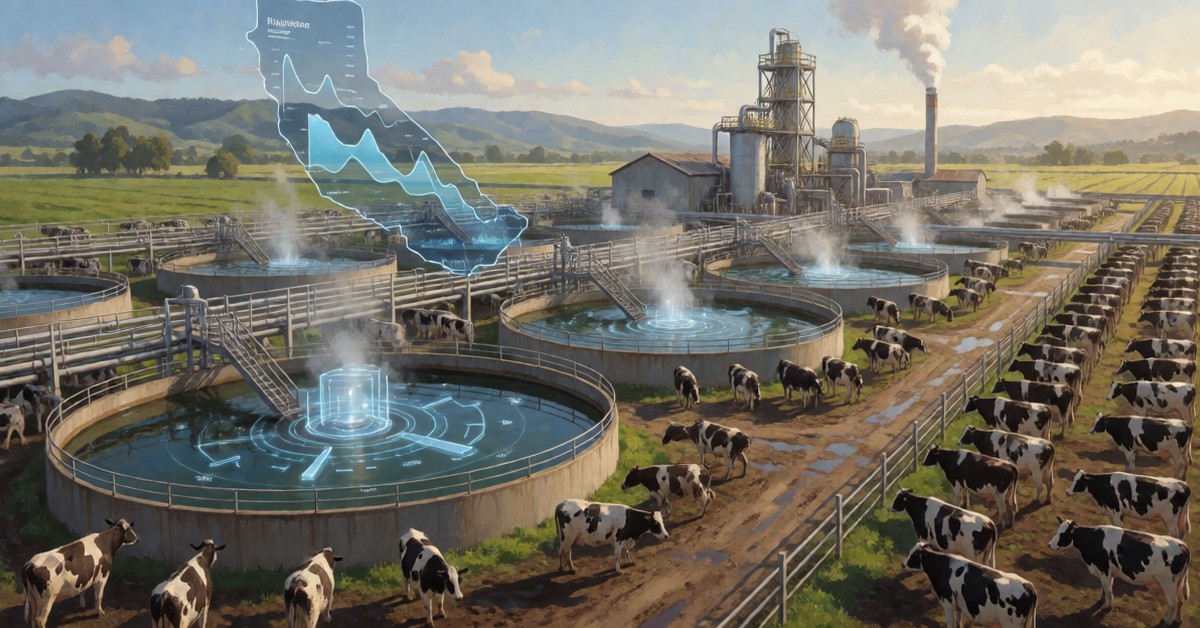
California faces growing scrutiny regarding its climate policies, specifically the system that pays farmers to capture methane from manure. This program encourages the dairy industry to transform greenhouse gas emissions into usable natural gas. Farmers burn this gas instead of allowing it to pollute the atmosphere. The policy, which established years ago, gained popularity among dairy producers because it offers financial incentives for managing waste. However, critics claim the economic and environmental math behind this large-scale initiative does not add up.
This specific state program pays dairy farmers who implement technology to capture methane from cattle waste. By capturing this methane, farmers convert the gas into a cleaner fuel source for their operations. The primary goal is reducing the amount of methane that escapes into the air, which is a potent greenhouse gas. Proponents claim this approach helps the state meet its ambitious climate targets by providing a revenue stream. The dairy sector, a major contributor to agricultural emissions, embraces the idea of converting waste into valuable energy. This initiative is a key part of 1. analyze the request: the user wants me to understand how state policies impact farming.
How Does the Program Work?
Participating farmers install specific hardware designed to collect and process the methane gas. This captured gas then channels into a system where it cleans and converts into natural gas fuel. The state provides financial support to offset the costs of maintaining this specialized capture equipment. Dairy operations successfully converting their waste gas contribute to the state’s overall climate goals. The program operates under the belief that turning a pollutant into a product creates a sustainable economic model for large farms. This process changes how agricultural waste is handled.
Financial Viability and Environmental Claims
Skeptics question the long-term financial stability of the arrangement, even though the program offers a clear capture mechanism. The state payments cover both operational costs and the inherent risk associated with deploying this technology. The effectiveness of the conversion process is also under review, as some argue the gas produced does not justify the high costs.
Several practical challenges exist when trying to scale this methane capture across a vast dairy industry. The necessary infrastructure for gas collection and refinement must tailor itself to the unique layout of individual farms. Not all dairy operations possess the space or utility access needed to integrate this complex equipment. Furthermore, the market for the natural gas must remain stable enough to ensure consistent financial rewards for the farmers. The state relies on the ongoing viability of this revenue stream to keep the policy running effectively.
The technology requires significant upfront investment from the farmers. Market fluctuations in natural gas prices directly affect farmer profitability. Scaling the required collection infrastructure presents logistical hurdles across the state. Monitoring the actual emissions reduction remains an ongoing scientific challenge.
The Bigger Picture
Skepticism often focuses on the actual economic return versus the cost of the required methane capture technology. Critics argue that state payments might not fully cover operational expenses once the initial investment pays off. They suggest the process only works under specific, favorable market conditions. The dairy industry must prove the revenue generated from the natural gas exceeds the cost of running the capture equipment. The claim that the program is a pure economic win requires much more detailed proof than currently exists. This is a key point in