









Elgato Wave Go Microphone: A Clip-On Mic Built for Creators Who Leave the Desk
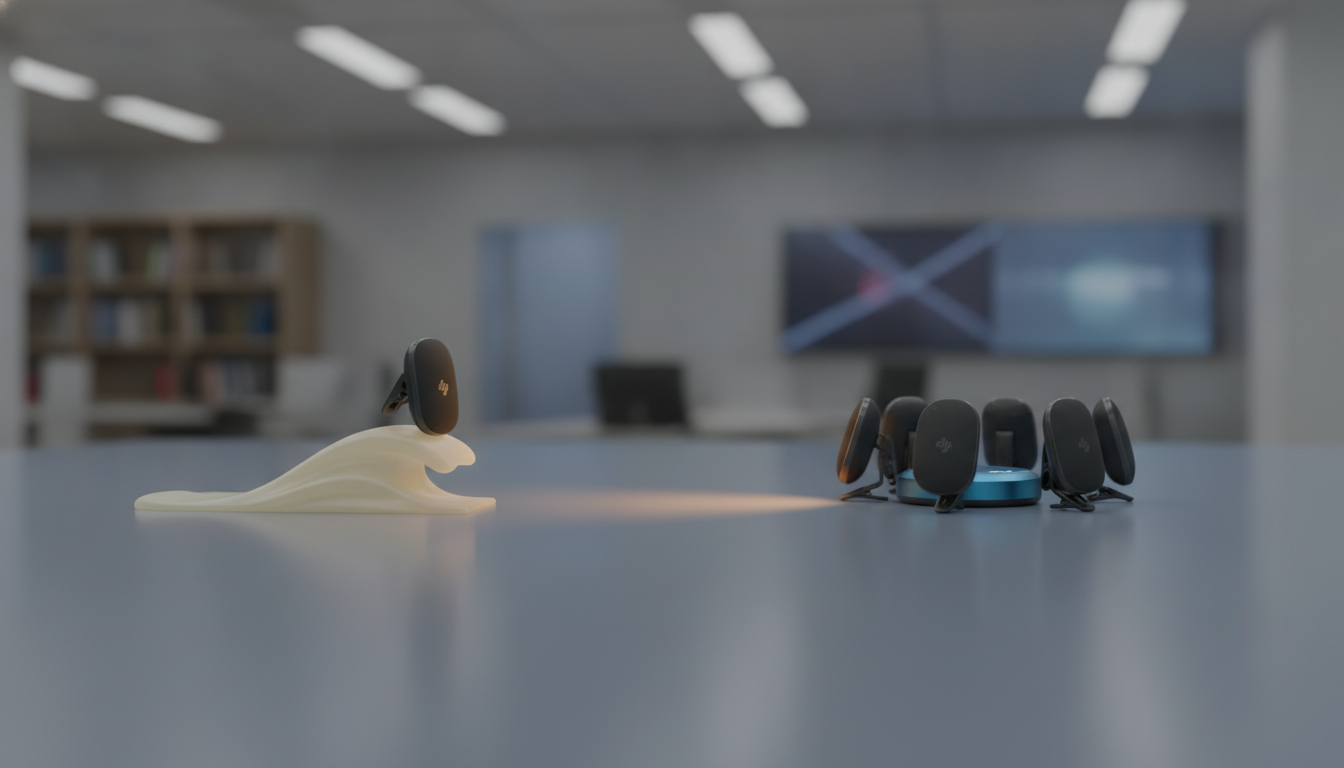
Elgato built its reputation on gear for streamers chained to a desktop setup. Now the company wants a piece of mobile creation with its first wireless microphone, the Wave Go. According to The Verge, the $99.99 Wave Go clips onto clothing for hands-free vlogging and run-and-gun content work. It arrives squarely in DJI’s lane, going head-to-head with the popular Mic Mini. This story follows Elgato Wave Go Microphone.
This matters because the wireless mic market has mostly belonged to DJI for the past few years. Elgato’s entry signals that the category has grown big enough to invite serious competition. For anyone building a content creation kit, more options usually mean better prices and faster innovation.
Why the Wireless Mic Form Factor Keeps Winning
Clip-on wireless mics solve a real problem for solo creators. Nobody wants to hold a boom pole while narrating a cooking demo or a product unboxing. The Wave Go’s magnetic clip design follows a format that DJI popularized, and that popularity tells its own story.
Creators want audio gear that disappears into the background of a shot. A tiny mic that clips to a collar does exactly that. Elgato clearly studied what worked for DJI before building its own version, which is a smart move rather than a shortcut.
Cinema Tools Keep Chasing the Analog Look
While Elgato chases portability, Arri is refining something more textural. The company released Film Lab 1.5, an update to its OpenFX plugin for color grading software. As PetaPixel reports, the new version expands the number of analog film formats the plugin can emulate.
Film Lab exists because digital sensors still can’t fully replicate the character of real film stock. Grain, color response, and highlight rolloff all behave differently on celluloid. Arri’s plugin tries to bottle those qualities for editors working entirely in digital workflows.
This update matters for a different reason too. It shows that even top-tier cinema brands see ongoing value in software, not just camera bodies. Hardware sells once, but a plugin can keep generating revenue through updates like this one.
Lenses Still Matter More Than Filters
No amount of software polish replaces a well-built lens, though. Tamron’s 16-50mm f/2.8 zoom, reviewed by PetaPixel, delivers pro-grade sharpness at an entry-level price for APS-C shooters. The reviewer praised Tamron for filling a gap that major manufacturers often leave open on cropped-sensor systems.
That gap exists because camera brands tend to prioritize full-frame glass. Third-party lens makers like Tamron step in and serve photographers who shoot on smaller, more affordable sensors. For anyone assembling gear through a creators starter kit, a lens like this often delivers more value than another accessory.
If you’re shopping for your first serious zoom, Tamron 16-50mm f/2.8 zoom lens (paid link) remains one of the most searched entry points into APS-C photography. Pairing solid glass with a dependable body still beats chasing every new gadget.
A Reminder That Nature Still Surprises Photographers
Not every camera story involves new hardware. Michigan’s Department of Natural Resources asked the public this summer to report gray fox sightings. One submission floored researchers: a photo of an ultra-rare melanistic gray fox, according to PetaPixel’s coverage.
Melanism causes an animal’s coat to turn almost entirely black due to excess pigment. It’s the opposite of albinism, and it shows up far less often in gray foxes than in other species. A member of the public captured the sighting with an ordinary camera, proving again that citizen photography still fuels real scientific discovery.
Elgato Wave Go Microphone: History Keeps Teaching the Camera Industry Something
PetaPixel also dug up a genuinely strange artifact this week. YouTuber James Warner, who runs the channel snappiness, found a 30-year-old digital camera with murky origins. Depending on the source, it goes by the EPixPro, the Obsidian Imaging IC/100, or the NEC PC-DC401.
Whatever its real name, the camera apparently anticipated design choices that didn’t become common until years later. Early digital cameras experimented wildly before the industry settled on familiar shapes and menus. Warner’s video is a reminder that today’s camera conventions weren’t inevitable; they were decided through years of trial and error.
Elgato Wave Go Microphone: What This Week’s Gear News Adds Up To
Taken together, these stories trace two parallel tracks in photo and video gear. One track chases pure convenience, like Elgato’s Wave Go clipping onto a shirt collar. The other chases authenticity, whether through Arri’s film emulation or Tamron’s optical precision.
Both tracks serve the same goal: helping creators get a usable shot without friction. A good clip-on mic saves a shoot from unusable audio. A sharp, affordable zoom lens saves a shoot from a soft, unusable frame.
For creators evaluating their next purchase, context matters more than hype. Ask whether a new wireless microphone actually fits your workflow, not just your wish list. Ask whether a plugin’s analog look serves your story, or just dresses up weak footage.
- Elgato’s Wave Go brings real competition to DJI’s wireless mic dominance.
- Arri’s Film Lab update deepens its library of analog film emulations.
- Tamron’s 16-50mm f/2.8 proves affordable APS-C glass can still perform.
- A melanistic gray fox sighting shows citizen photography still matters.
- A forgotten 1990s camera reveals how unpredictable early digital design really was.
None of this gear replaces good judgment behind the lens. But a wireless microphone, a sharp zoom, or a thoughtful plugin can each remove one more barrier between an idea and a finished shot.
As an Amazon Associate, TechMogo earns from qualifying purchases.