






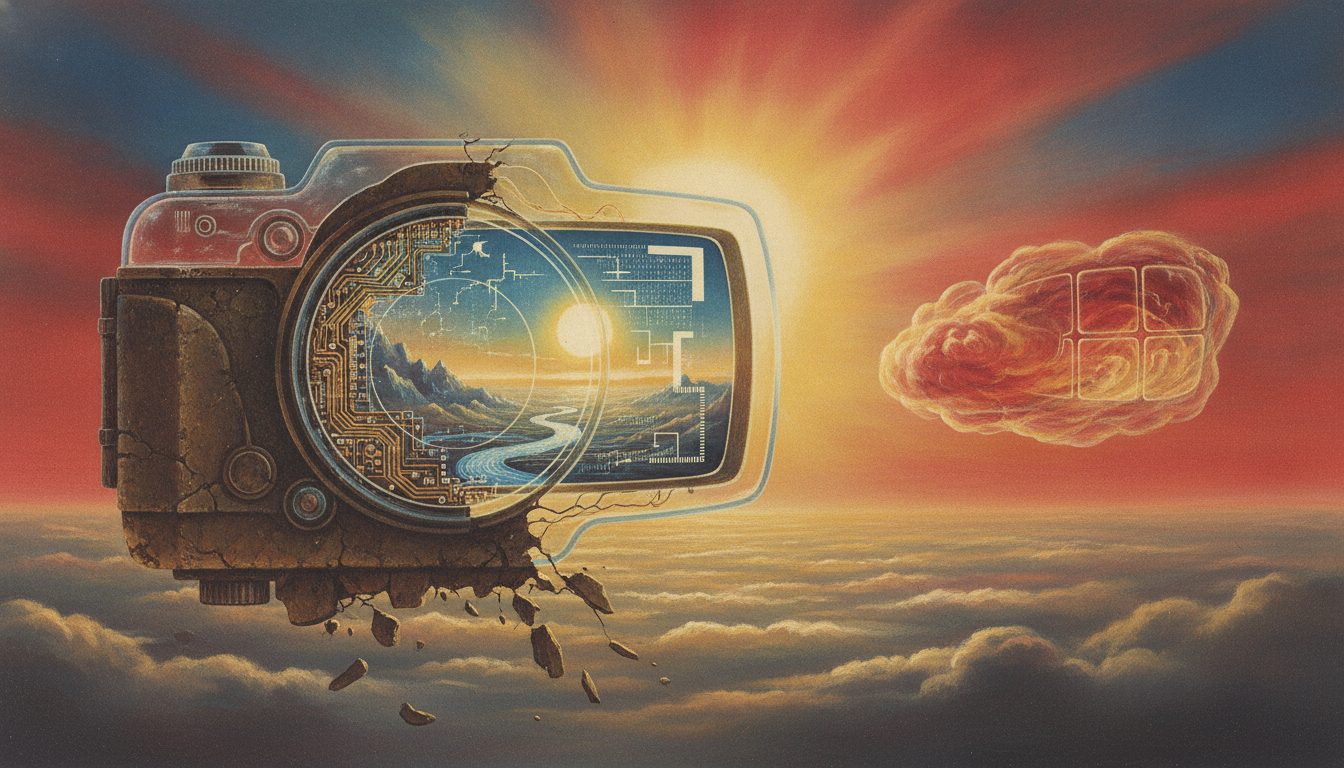
A Small Window Gets Its Own Room
Nikon is giving the viewfinder its own stage. The Nikon Museum in Tokyo now hosts a special exhibit on the component, as reported by PetaPixel.
The Nikon viewfinder exhibit traces the part from the analog era to today’s mirrorless bodies. It is a quiet subject for a museum. That is what makes it interesting.
The Part You Never Photograph
Photographers rarely talk about the viewfinder. They talk about sensors, lenses and autofocus. Yet every picture begins with an eye pressed to that small opening.
The viewfinder decides how you see the scene. It shapes framing, timing and focus. In that sense, it shapes the photograph before the shutter fires.
Why a Museum Would Choose It
Most camera exhibits show bodies and lenses. They celebrate the finished object. A viewfinder exhibit does something different. It focuses on the act of looking.
That choice feels right for Nikon. The company built its reputation on optical quality. Its finders earned praise for brightness, clarity and trust.
From Glass to Pixels
The story the exhibit tells has two chapters. In the first, light travels through glass and mirrors to the eye. In the second, a tiny display draws the scene electronically.
The Optical Era
Film SLRs used a mirror and a prism. Light bounced up and into the eye. Nothing sat between the photographer and the world except glass.
That directness had real value. There was no lag and no processing. You saw what the lens saw, at the speed of light.
The Mirrorless Shift
Mirrorless cameras removed the mirror. In its place, they put an electronic viewfinder. The tiny screen showed the image the sensor captured.
Early versions disappointed many photographers. They were grainy and slow. Resolution and refresh rates have improved enormously since then.
Today’s electronic finders offer advantages that glass cannot match:
- They preview exposure before you shoot.
- They show focus peaking and level guides.
- They work well in dim light.
- They let you review shots without lowering the camera.
What the Exhibit Gets Right
Strip away the nostalgia and a useful point remains. The viewfinder is an interface. Its design reflects what each era believed a photographer needed.
The optical finder valued purity. The electronic finder values information. Neither choice is wrong. Each one changes how you work.
Meanwhile, the phone screen has trained a generation to shoot at arm’s length. A viewfinder asks for something else. It asks you to lean in and commit to a frame.
A Case for Slowing Down
Pressing the camera to your face blocks out distraction. It narrows the world to a rectangle. Many photographers say this focus improves their pictures.
That idea gives the exhibit relevance beyond history. It argues that how we look affects what we make.
The Craft Behind the Glass
A good finder is hard to build. Engineers must balance magnification, eye relief and brightness. They also have to keep the image sharp across the frame.
Those details rarely appear on a spec sheet. Yet photographers feel them within seconds. A comfortable finder makes a camera feel natural.
If you want to try the difference yourself, a mirrorless camera with electronic viewfinder is an easy place to start. Compare it against an older optical body if you can.
Nikon mirrorless camera (paid link)
Takeaways
The exhibit makes a modest case. It deserves attention.
- The viewfinder shapes every photo before capture.
- Optical finders offered purity and zero lag.
- Electronic finders add previews and data.
- Nikon’s museum treats looking as a craft.
Good design rarely announces itself. The viewfinder proves it. Nikon’s exhibit simply asks us to notice.
As an Amazon Associate, TechMogo earns from qualifying purchases.