










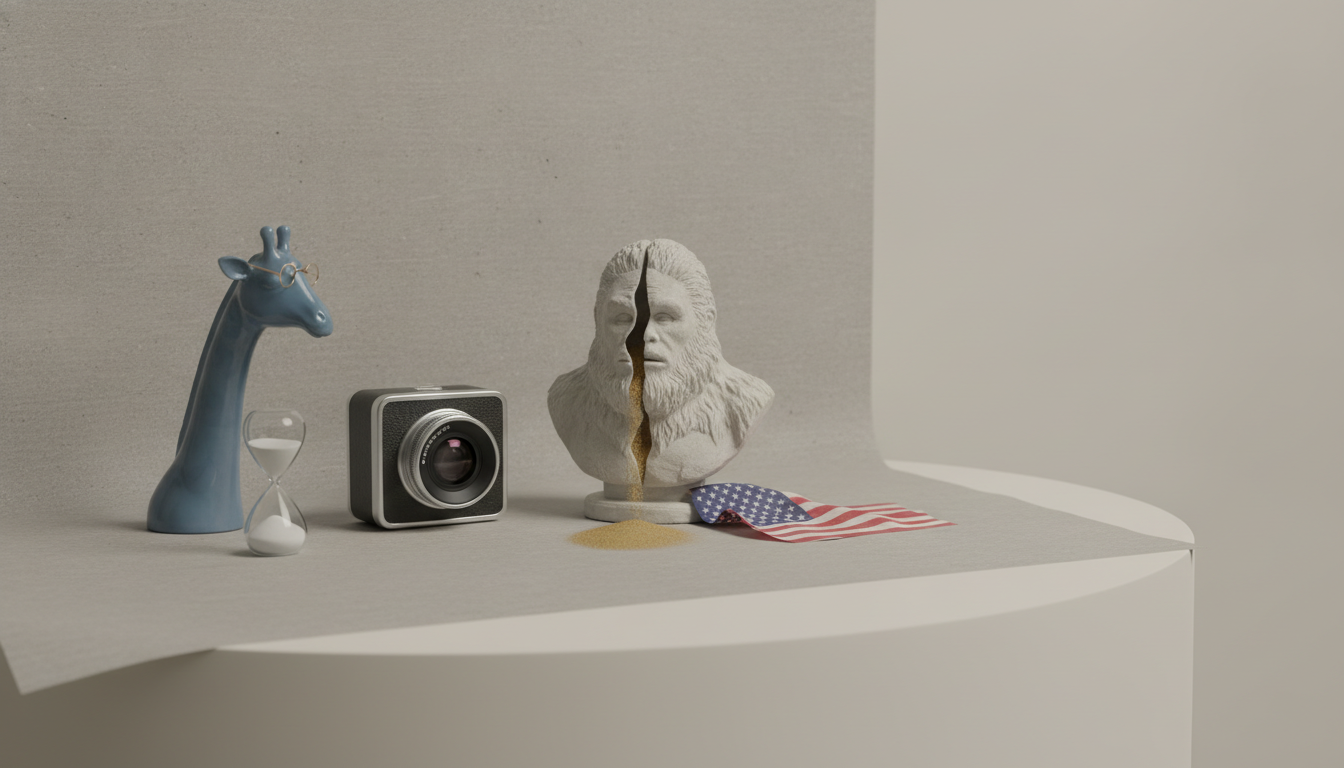
Camera news this week swings from the tiniest gadget on Earth to a 60-year-old Bigfoot hoax. The common thread is simple. People still love pointing a lens at the world, whether it fits in your palm or hangs from your neck. This story follows Tiny Camera News Roundup.
Tiny Camera News Roundup: The Kenko Pieni III Is Basically Camera Jewelry
Kenko Tokina just launched the Pieni III, a $38 digital camera you wear like a pendant. According to PetaPixel, this little camera packs a 1-megapixel sensor into a body smaller than a matchbox.
That resolution sounds laughable next to any modern smartphone. But that is not really the point here.
Kenko Tokina built its reputation on budget optics and quirky gear. The company is also reportedly developing a new lens it calls unlike anything else on the market. Meanwhile, it keeps churning out these novelty cameras for the Japanese market.
Why a 1MP Camera Still Matters
Low-resolution cameras have found a real niche lately. Think of the digicam revival among younger photographers chasing a grainy, nostalgic look.
A wearable 1MP camera fits that trend perfectly. It turns photography into something playful instead of precise.
I would not recommend the Pieni III as your only camera. For anyone serious about image quality, pairing a smartphone with a compact point-and-shoot camera (paid link) still makes more sense for everyday shooting.
Ricoh Celebrates 30 Years of the GR Line
Ricoh Imaging is marking the 30th anniversary of its GR series with a special edition GR IV camera. The brand also released a set of anniversary pins, and PetaPixel calls them genuinely adorable, as noted in its coverage of the accessories.
The GR line built a cult following among street photographers. Its compact body and sharp 28mm lens made it a favorite for discreet shooting.
Three decades later, that formula still works. Ricoh is leaning hard into nostalgia marketing, and honestly, it is working on photographers like me.
Street Photography Keeps Its Soul
Speaking of street photography, Alex Webb just released a new book called Walking Blues. The acclaimed photographer traveled across roughly 40 American cities for the project.
Webb drew inspiration from American blues music for this collection. His signature style blends bold color with layered composition.
According to PetaPixel’s report on the project, Webb focused on moments of connection between communities. That theme feels relevant in an era when most people experience cities through a phone screen.
A Different Kind of Wildlife Photography Project
Wildlife photography got its own standout release this week too. Remembering Giraffes just joined the acclaimed Remembering Wildlife book series.
The collection features donated images from major names in the field. Contributors include Jonathan and Angela Scott, Marsel van Oosten, Frans Lanting, and Greg du Toit.
Each book in this series supports wildlife conservation efforts directly. Photographers donate their work, and proceeds fund anti-poaching and habitat protection programs.
Giraffes rarely get the spotlight that lions and elephants receive. This book corrects that oversight with striking portraits of the world’s tallest mammal.
For anyone building a home photography library, a book like this pairs well with a quality photo display frame (paid link) for displaying prints around the house.
Bigfoot Footage Finally Gets Debunked
Now for something stranger than any camera gadget. A new documentary called Capturing Bigfoot claims to finally settle the famous 1967 footage debate.
Roger Patterson and Robert Gimlin shot their famous Bigfoot film on October 20, 1967. The grainy 16mm clip has fueled cryptid debates for nearly 60 years.
Newly surfaced footage, found decades later, reportedly proves the whole thing was staged. As PetaPixel explains in its piece on the found footage, the documentary lays out compelling evidence.
I find this fascinating from a pure image-forensics angle. Grainy footage shot on old film stock can hide a lot of tricks.
Modern cameras, even cheap ones like the Pieni III, capture far more detail than that 1967 film ever did. Technology marches on, but mysteries like this one still capture public imagination.
Tiny Camera News Roundup: What Ties These Stories Together
Every story this week touches photography in a different way. Here is the quick rundown:
- A $38 wearable camera proves tiny gadgets still have charm.
- Ricoh’s anniversary pins celebrate three decades of a cult classic.
- Alex Webb’s new book honors street photography’s human connections.
- Remembering Giraffes spotlights an underappreciated animal for conservation.
- A documentary finally closes the book on a 60-year-old hoax.
None of these stories involve flagship megapixel wars or AI upscaling features. They are about people, animals, and the stories cameras help tell.
Tiny Camera News Roundup: Who Should Care About the Pieni III
If you collect novelty gadgets, the Pieni III is an easy impulse buy. It will not replace your phone or your mirrorless kit.
Think of it more like a wearable Polaroid for parties and travel. It is a conversation starter first and a camera second.
Serious hobbyists should instead look at compact options like a premium compact camera (paid link) for genuine image quality on the go. The Pieni III is for fun, not for serious documentation.
Tiny Camera News Roundup: Takeaways
This week’s camera news spans from pocket-sized novelty to serious documentary journalism. Kenko Tokina shows that cheap and tiny can still delight people.
Ricoh proves that anniversaries sell nostalgia better than any spec sheet. Webb and the Remembering Wildlife team remind us photography still documents real human and animal stories.
And that old Bigfoot footage? It finally gets the debunking many researchers predicted for decades.
As an Amazon Associate, TechMogo earns from qualifying purchases.