








Astronomy Photographer Year 2026: A Predator in the Sky Takes the Crown
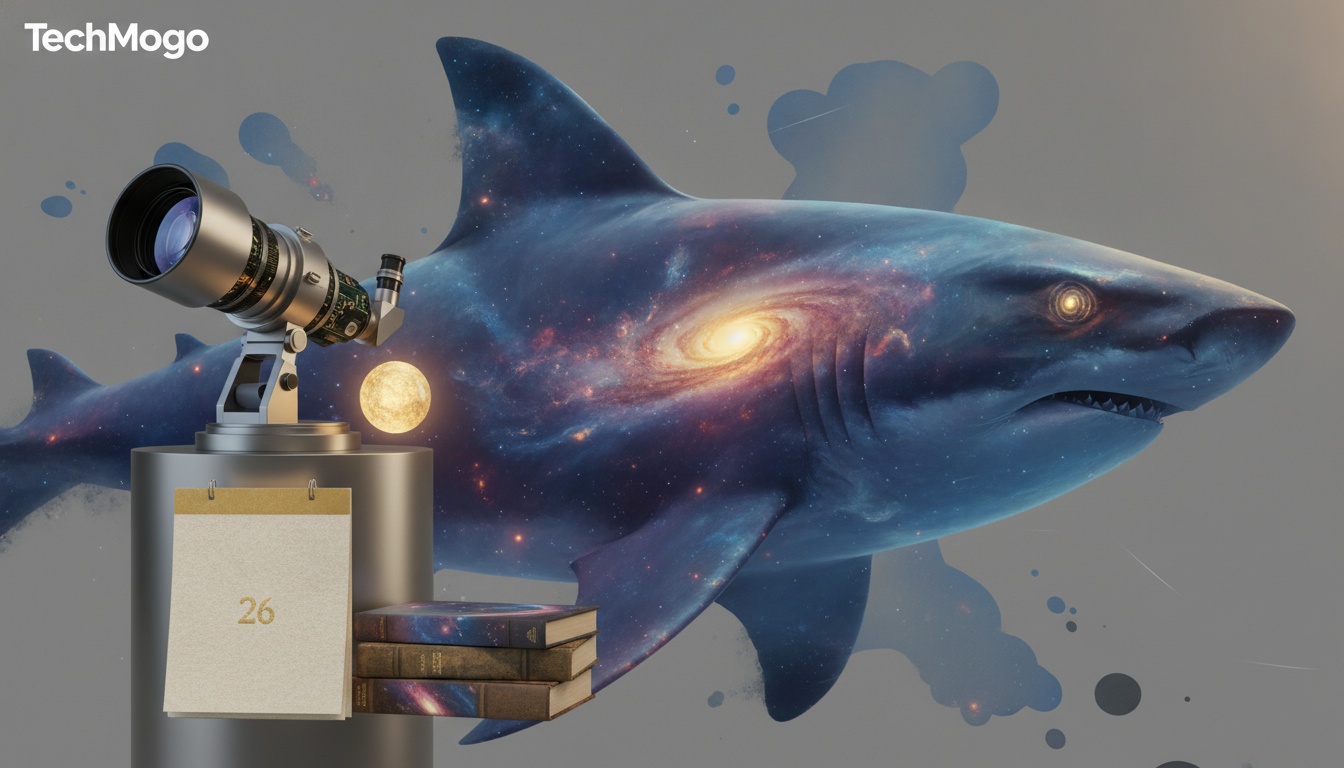
The Astronomy Photographer of the Year competition just crowned its most striking winner in years. Photographer Ali Alobaidly took the top prize with an eerie, detailed shot of the Shark Nebula. The Royal Observatory Greenwich runs this contest, and this year’s edition drew entries from across the globe, as reported by PetaPixel. This story follows Astronomy Photographer Year 2026.
Alobaidly’s image earned a £10,000 prize, close to $13,400. The nebula’s shape genuinely resembles a shark gliding through cosmic dust. That eerie resemblance, combined with the photo’s sharp detail, made it stand out among 31 winning entries.
Why This Win Matters for Astrophotography
Astronomy Photographer of the Year has become a benchmark for the hobby. Amateur photographers now compete directly with professionals using serious gear. Many entrants stack hundreds of exposures to pull faint nebulae out of black skies.
This year’s crop shows how far consumer equipment has come. A hobbyist with a mid-range telescope and a modified camera can now capture images that once required observatory-grade hardware. That shift keeps pulling new people into the hobby every year.
NASA’s New Telescope Opens Its Eyes
While ground-based photographers celebrate, NASA is testing a much bigger camera. The Nancy Grace Roman Space Telescope launched on August 30, 2026. It now sits nearly one million miles from Earth at the second Lagrange point, or L2.
NASA reports that Roman’s Wide Field Instrument has powered on for its first checks. This 300-megapixel sensor dwarfs anything a consumer camera offers. The $4.3 billion telescope aims to survey huge patches of sky in far greater detail than Hubble ever could.
Roman won’t replace ground photographers like Alobaidly. Instead, it complements them. Amateur astrophotographers capture beauty and inspire wonder, while Roman will chase dark energy, exoplanets, and cosmic structure at a scale no backyard rig can match.
What L2 Testing Actually Means
Getting a telescope this far out takes patience. Engineers must calibrate every instrument slowly, checking for vibration, temperature swings, and alignment errors. This first wake-up test marks a major milestone, not the finish line.
Full science operations likely won’t start for months. Still, early data from L2 will tell NASA whether the $4.3 billion investment is paying off as designed.
The Moon Shows Its Scars
Space photography isn’t only about distant galaxies. NASA also released before-and-after images of a fresh crater on the Moon. A massive asteroid impact carved out the crater, and NASA scientists say the pictures reveal remarkable detail about impact physics.
Researchers rarely get such a clean comparison of a lunar surface before and after impact. These photos let scientists measure ejecta patterns and crater depth with real precision. That data helps model future impact risks closer to home.
Kodak Ektar 100 Keeps Film Photography Alive
Not every photography story this week points to space. Kodak’s Ektar 100 remains a favorite among film shooters, according to PetaPixel’s Film Friday feature. The film delivers fine grain, vivid color saturation, and punchy contrast.
Alongside Kodak’s Portra line, Ektar 100 stays one of the most-used color films on the market. Photographers reach for it when they want landscapes and portraits to pop without heavy editing. If you’re building out a film kit, a reliable 35mm film camera (paid link) pairs naturally with this stock for shooters who want reliable, saturated results straight out of the camera.
Why Film Still Matters in a Digital Age
It’s easy to assume astrophotography and film shooting live in different worlds. Both actually reward patience and technical skill. Ektar shooters chase color accuracy the same way astrophotographers chase faint light from nebulae.
Film’s resurgence also ties into a broader hunger for tactile, imperfect images. Digital sensors like Roman’s 300-megapixel array chase precision. Film photographers, meanwhile, chase character.
Astronomy Photographer Year 2026: A New Cat Species Reminds Us Earth Still Surprises
Not everything worth photographing lives in space. Biologist Paola Nogales-Ascarrunz helped identify a new cat species in Bolivia, Leopardus tilcayo. This marks the first newly named living cat species in over a century.
Nogales-Ascarrunz first learned about the animal ten years ago. A local wildlife sanctuary called her about “a weird cat,” as detailed by National Geographic’s report on PetaPixel. That single phone call eventually led to a full scientific classification.
The accompanying photos show a small, striking wildcat with distinctive markings. Wildlife photographers rarely get a first look at a brand-new species. This discovery proves Earth still hides surprises worth documenting closely.
Astronomy Photographer Year 2026: Connecting the Threads
These five stories share one theme: patient observation reveals what we’d otherwise miss. Alobaidly waited through countless clear nights to capture the Shark Nebula. NASA engineers spent years building Roman before its first light check at L2.
Lunar scientists needed before-and-after imagery to understand a violent impact. Kodak’s chemists refined Ektar’s formula over decades to nail its signature look. Nogales-Ascarrunz spent ten years confirming a single wildcat’s identity.
Whether you’re shooting nebulae, loading a roll of color negative film (paid link) into a film camera, or just following NASA’s mission updates, this week proves photography still drives discovery. If you want sharper night-sky shots yourself, a solid beginner-friendly astrophotography telescope (paid link) makes a real difference in framing distant subjects.
Astronomy Photographer Year 2026: Takeaways for Photography Fans
Here’s what stands out from this week’s photography news:
- Astronomy Photographer of the Year keeps raising the bar for amateur astrophotography.
- NASA’s Roman telescope just passed its first major test one million miles from Earth.
- Fresh lunar crater images give scientists rare impact data.
- Kodak Ektar 100 proves film photography still has a loyal following.
- A newly named cat species shows Earth still has secrets left to find.
Space and science photography keeps expanding in every direction this year. From backyard telescopes to billion-dollar space observatories, the tools keep improving. What stays constant is the patience behind every great shot.
As an Amazon Associate, TechMogo earns from qualifying purchases.