










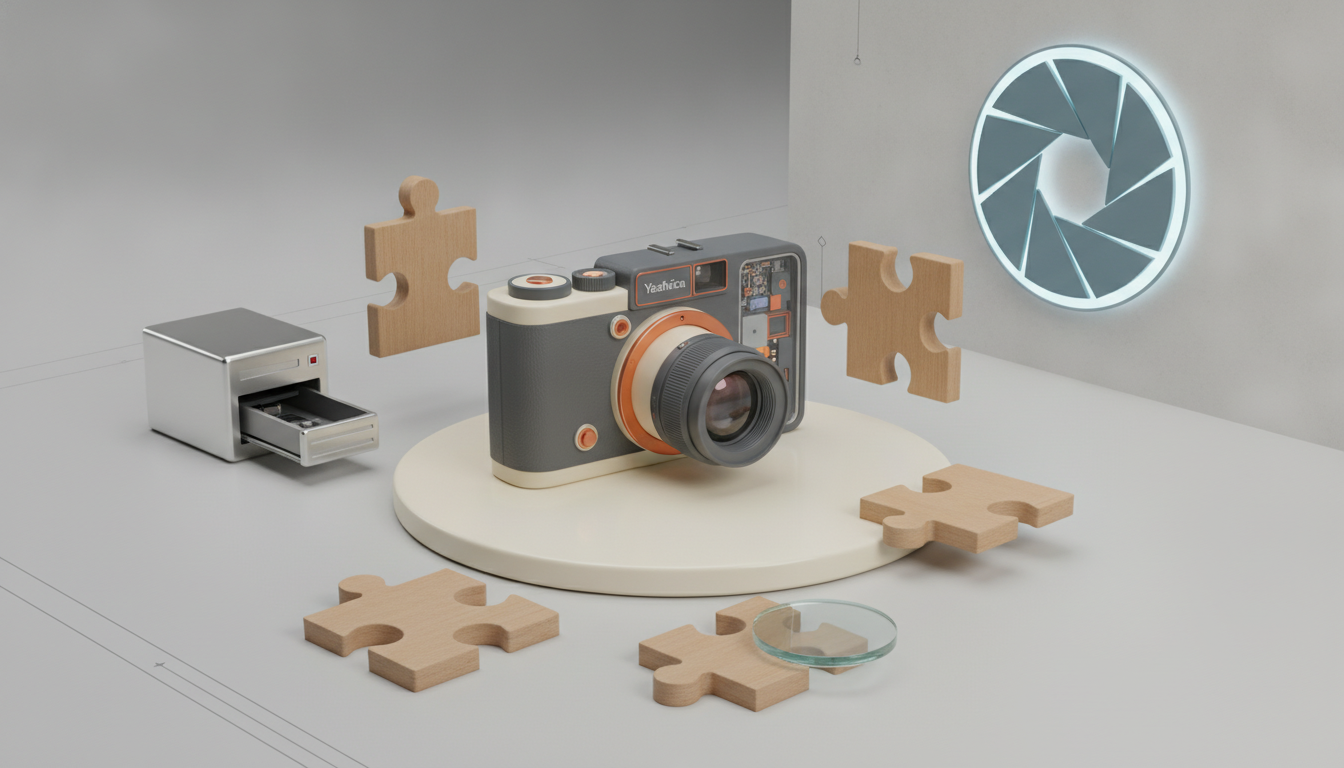
Yashica Y16 Camera Leads: A Retro Body With a Modern Question Mark
Good design appears after the unboxing, and this week’s camera news puts that idea to the test. The Yashica Y16 camera revives a 1959 compact with a fresh digital heart, according to PetaPixel. It looks charming in photos. But charm only matters once you’ve carried it through a season of real use. This story follows Yashica Y16 Camera Leads.
The modern Yashica brand has leaned on nostalgia before. This time, the company borrows both the name and the silhouette of a classic rangefinder. The Yashica Y16 camera pairs that retro shell with digital guts built for casual shooters. That combination raises a familiar question for anyone who reviews gadgets for a living. Does the design carry real ergonomic thought, or does it simply chase a retro aesthetic?
Why the Yashica Y16 Camera Matters Beyond Looks
Compact cameras live or die on how they fit a hand and a habit. A dial that looks vintage still needs to turn smoothly in cold weather. A body that photographs beautifully still needs a grip that survives a bag full of keys. Until reviewers get hands-on time, the Yashica Y16 camera remains a promising shape rather than a proven tool.
Repairability also deserves a mention here. Retro-styled electronics often hide modern sealed components behind vintage-looking shells. If Yashica wants loyalty from photography enthusiasts, spare parts and service support will matter more than the finish. Longevity is the hidden specification that most launch coverage skips entirely.
Mac Studio With M5 Max Raises the Ceiling for Editing Rigs
On the workstation side, Apple’s new Mac Studio with M5 Max earns strong marks from PetaPixel’s own testing. The outlet calls it the best Mac yet for photo and video work. That praise carries weight, especially since Apple retired the Mac Pro entirely.
The Mac Studio now carries the full weight of Apple’s professional desktop lineup. For photographers juggling massive raw files, that responsibility matters more than benchmark charts. A machine built to last through several camera generations offers better long-term value than one built for a single upgrade cycle.
Sustainability Through Form Factor
The Mac Studio’s compact chassis also says something about design restraint. Apple avoids the tower-sized footprint of older Mac Pros while keeping serious performance. That smaller footprint means less material, less shipping weight, and a smaller desk presence. For editors thinking about long-term studio setups, a reliable external SSD for photo and video backups (paid link) still pairs well with any high-performance workstation.
Apple’s Variable Aperture Solves a Real Ergonomics Problem
Apple’s iPhone 18 Pro brings a variable aperture to its main camera for the first time. Apple explained the reasoning directly to PetaPixel rather than leaving it to speculation. The feature lets photographers control depth of field without swapping lenses or devices.
This is the kind of change that actually improves daily use. A fixed aperture forces trade-offs between low light performance and background blur. A variable one adapts to the scene instead of forcing the photographer to compromise. That flexibility matters more for accessibility than most spec sheets admit.
Accessibility Is Part of Performance
Photographers with limited mobility or dexterity often struggle with manual lens changes. A built-in variable aperture removes a physical barrier from creative control. Apple’s explanation suggests genuine engineering intent, not just a marketing checkbox. That distinction separates cosmetic innovation from features that actually change how people shoot.
Fujifilm’s Rise Reflects Who Gets to Hold the Camera
Meanwhile, Fujifilm has climbed into the top three camera makers by shipment volume. Nikkei points to women and younger photographers as key drivers of that growth, as reported by PetaPixel. This shift matters more than a simple sales milestone.
Camera design has spent decades assuming a narrow customer profile. Fujifilm’s retro-styled bodies, approachable dials, and color science clearly resonate with a broader audience now. That broader appeal suggests thoughtful design choices, not just clever marketing.
Yashica Y16 Camera Leads: Design That Welcomes New Photographers
Smaller grips, lighter bodies, and intuitive controls lower the barrier to entry. Younger and female photographers often cite these details when explaining their camera choices. Fujifilm’s success shows that inclusive design pays off commercially, not just ethically.
The Yashica Y16 camera could learn from this lesson directly. Retro looks alone will not build a loyal audience. Genuine usability across different hands and skill levels builds the kind of long-term brand loyalty Fujifilm now enjoys.
Yashica Y16 Camera Leads: A Separate Reminder About AI and Trust
Away from hardware, a viral AI-edited photo cost one American CEO her welcome in Canada. The image showed her family in “Lake America” sweatshirts, and it sparked immediate backlash, according to PetaPixel. The story has nothing to do with cameras directly. But it says something about how synthetic imagery now carries real reputational risk.
As more camera makers add AI tools to their apps and editing software, that risk becomes part of the product conversation. Manufacturers marketing “AI enhancement” features should consider how easily a single bad edit can spread. Trust, once lost, takes far longer to rebuild than a sensor upgrade takes to ship.
Yashica Y16 Camera Leads: Takeaways for Buyers and Makers Alike
This week’s camera stories share a common thread. Good design must survive contact with real users, real hands, and real risk. Consider these points before choosing your next tool:
- The Yashica Y16 camera looks charming, but ergonomics and repairability remain unproven
- Mac Studio with M5 Max now anchors Apple’s entire professional desktop lineup
- Variable aperture on the iPhone 18 Pro solves genuine accessibility and creative problems
- Fujifilm’s growth shows that inclusive design drives real sales, not just goodwill
- AI-generated imagery now carries reputational stakes that extend beyond photography itself
Ownership starts where the keynote ends, and every one of these stories proves it. The camera you buy today should still make sense in five years. That standard, more than any spec sheet, decides what lasts.
As an Amazon Associate, TechMogo earns from qualifying purchases.